 PRECISION DRIVE
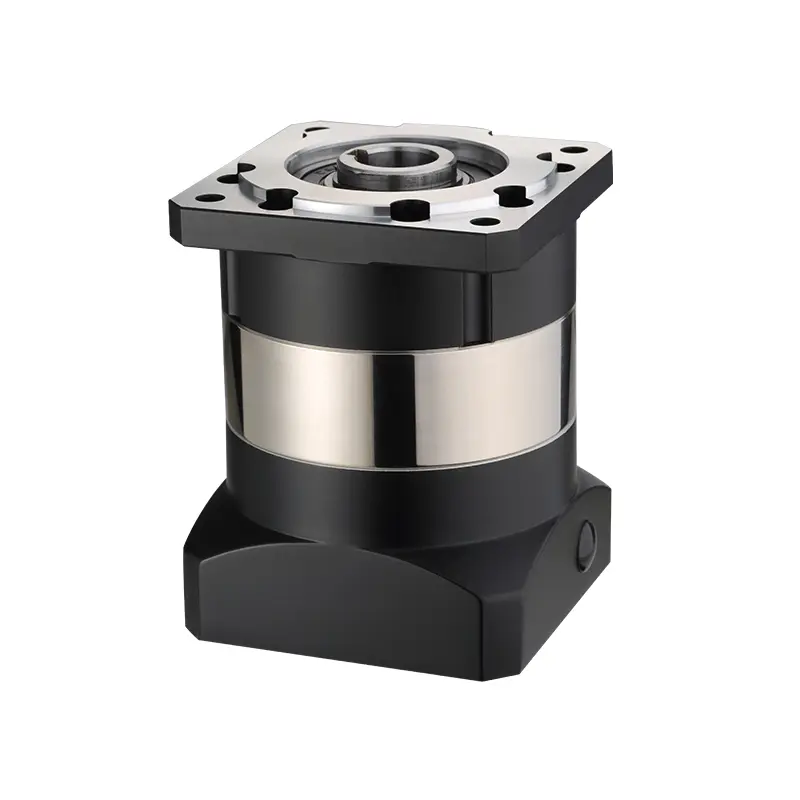
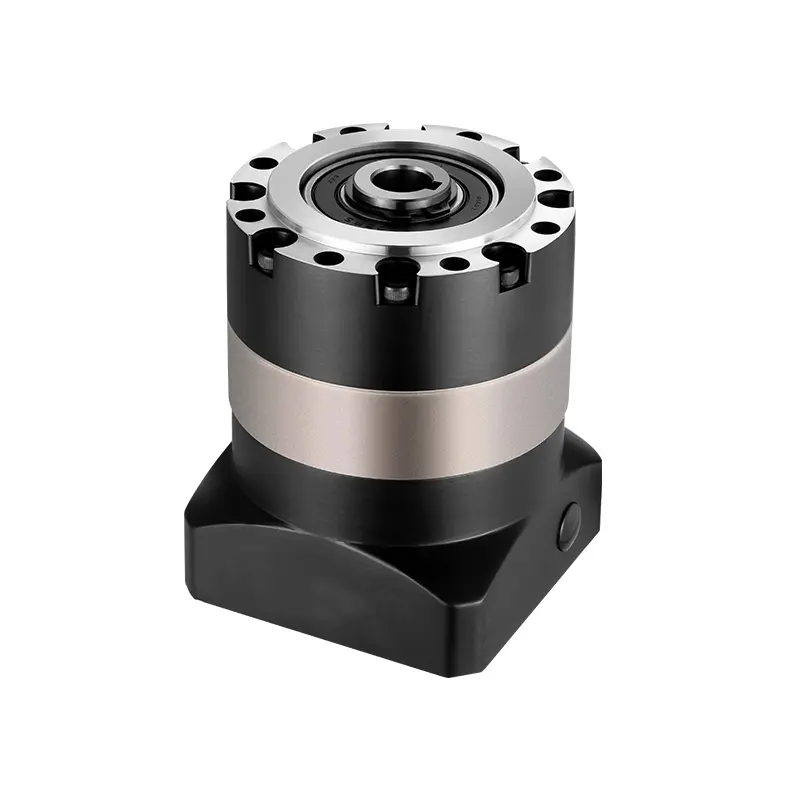
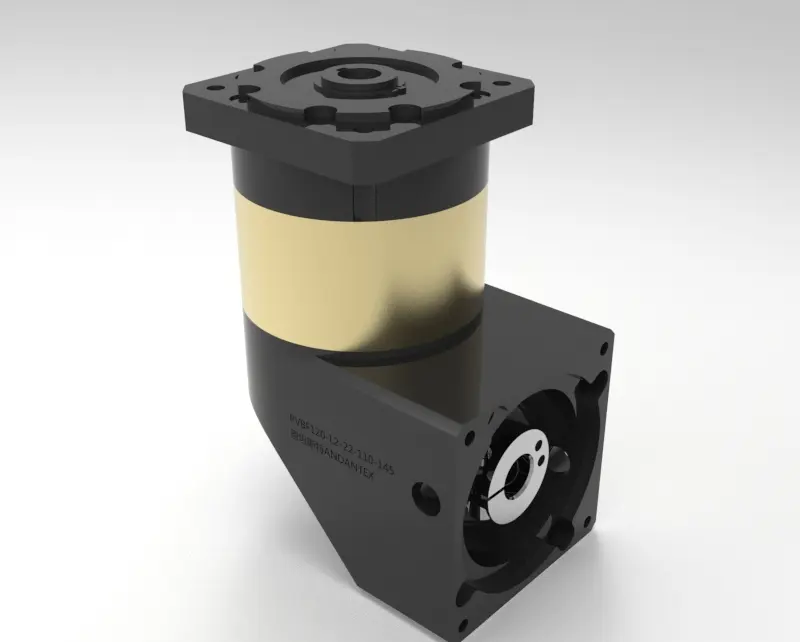
When a rotary indexing station already carries a precision-machined tooling fixture plate and bundles of Ethernet, vacuum, or pneumatic lines routed down its center opening, replacing the rotary stage should never force you to scrap the fixture or re-crimp harnesses. A true drop-in hollow rotary table replacement—such as our crossed-roller NT085 Hollow Rotary Table or wider NT Hollow Rotary Series—preserves your top tooling and center pass-through by matching four critical dimensions (plus a MOQ = 1 custom adapter ring option when legacy vendor bolt patterns differ).
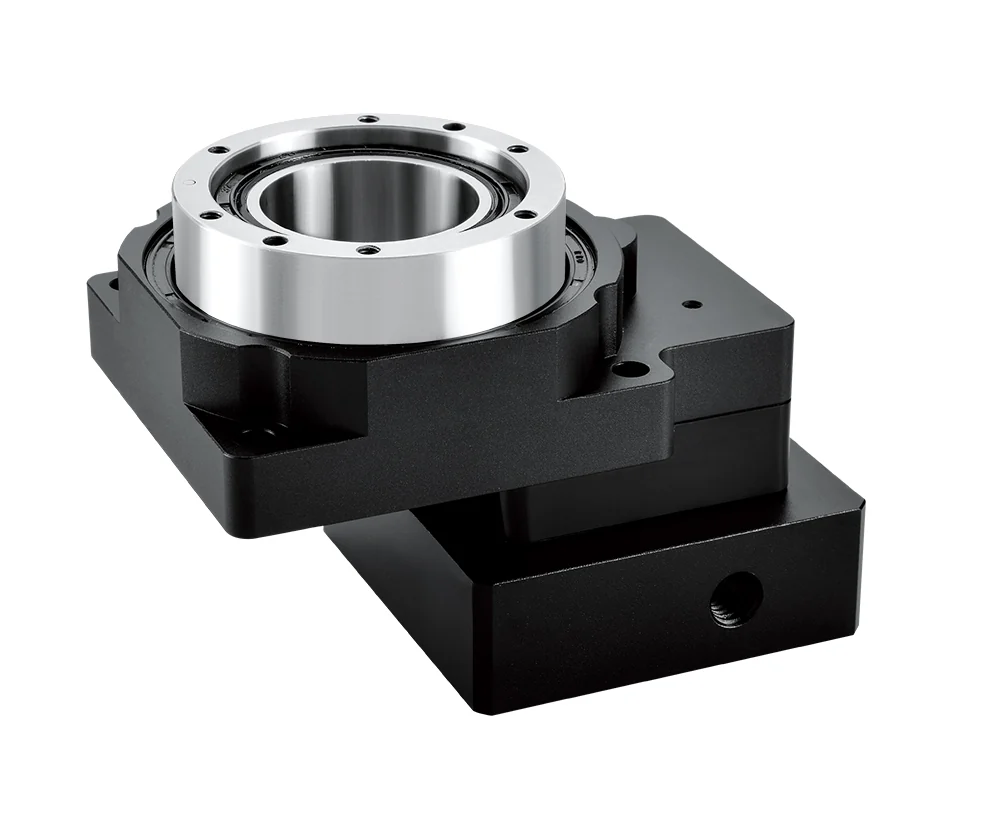
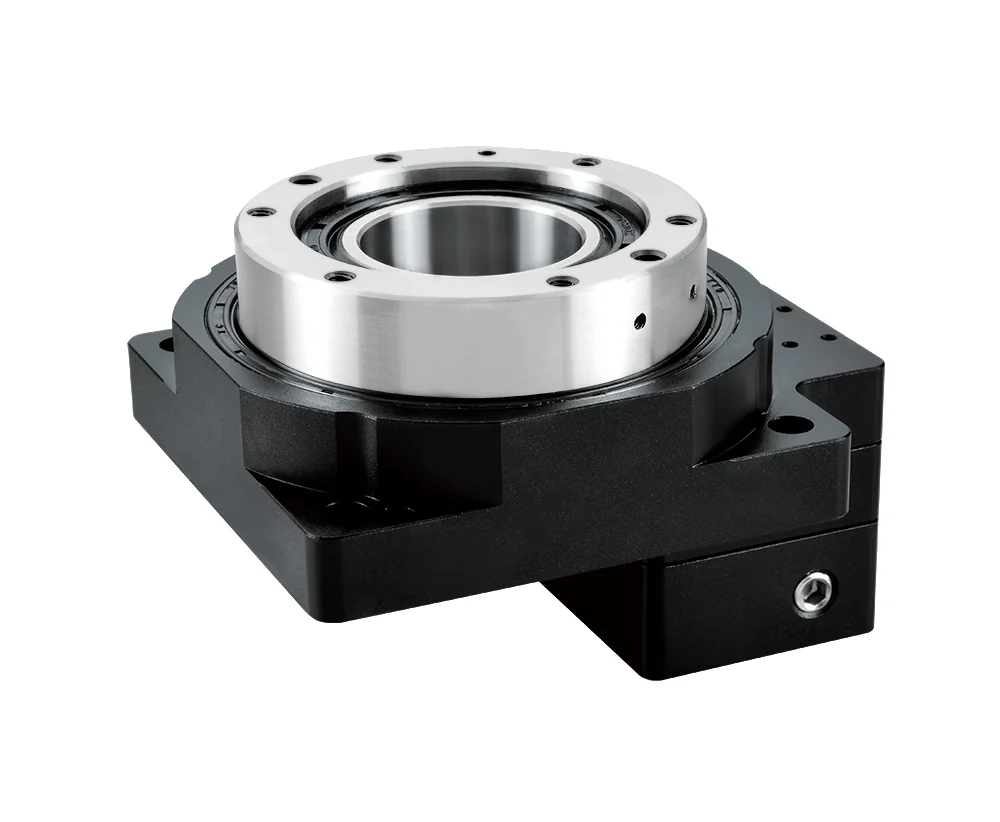
1. The 4 Dimensions That Keep Existing Tooling and Center Cables Intact
Nominal model numbers (85, 130, 200) align closely across major Asian/Japanese crossed-roller hollow rotary stages, yet minor bolt-circle and height offsets can break optical focus or fixture alignment unless verified systematically:
| Dimension on Existing Table | Why It Protects Your Fixture & Harness | How to Verify Before Ordering |
|---|---|---|
1. Rotating Tabletop PCD & Dowel Pins | Determines whether existing nests and precision dial plates bolt straight on without boring new holes | Measure outer ring tapped PCD + thread size, inner spigot/recess diameter, and H7 dowel-pin hole angular position |
2. Clear Center Through-Bore (ID) | Ensures existing M12 plugs, camera coax, or manifold blocks pull cleanly through without cutting connectors | Measure the narrowest inner tube ID—not just the top chamfer—plus stationary flange step depth |
3. Overall Table Stack Height (H) | Preserves Z-axis focal height for machine-vision cameras, dispense needles, or laser heads | Measure bottom baseplate to top rotating table face (typically compact on inline NT vs. stacked NTF ratios) |
| 4. Base Mounting & Side/Rear Motor Exit | Avoids colliding with frame gussets or cable tracks under the rotary plate | Compare base bolt corners (PCD) and choose inline (NT) vs. 90° (NTFA / HYP) motor posture |
On crossed-roller stages like NT085 (5 / 10 / 20:1, 10 Nm rated / 20 Nm max torque, 500 N max axial load, ±0.5 arcmin accuracy and ≤ 10 arcsec repeatability), stiff integrated bearings eliminate wobble under eccentric fixture loads while keeping the central aperture wide open. For multi-ton payloads or active machining forces during rotation, compare against heavy cam-roller units in our Cam Roller (HTM/HTN) vs. Hollow Rotary (NT/NTF) Selection Guide.
2. How to Swap a Hollow Rotary Table Without Un-Pinning Pre-Wired Harnesses
One practical concern maintenance engineers ask is: "My cables and air lines pass straight down the middle of the rotary bore—how do I check whether the new table's bore clears the largest connector?"
Follow these three steps before issuing an RFQ:
- Measure the Largest Existing Connector Diagonal: Even if the wire bundle is
18 mmthick, a pre-terminated M12/DB15 plug may require28–33 mmminimum clear bore to pass cleanly without de-pinning. Compare directly against ourNT060 / NT085 / NT130 / NT200 / NT280inner-tube specifications in the Download Center. - Separate Stationary Center Tube vs. Rotating Tabletop: Ensure internal rotary-to-stationary seals and retaining shoulders match so twisting hoses do not snag on rotating ring-gear steps.
- Check Combined Inertia & Homing Sensor Logic: Moving your fixture plate onto a fresh table means keeping existing servo tuning intact—verify load inertia ratio and
PNP vs. NPNhome-sensor polarity using our Turnkey Hollow Rotary Table With Servo Checklist.
3. What If the Old OEM Bolt Circle Differs by a Few Millimeters?
Occasionally a discontinued European or custom Taiwanese stage uses an odd tabletop bolt ring (PCD shifted by 4 mm or 6 × M5 instead of 8 × M6). You still do not have to re-machine your hardened aluminum dial plate:
- ANDANTEX machines a thin precision steel transition ring (
8–12 mm) or custom top plate (MOQ = 1) pre-drilled with your fixture's exactPCDand dowel holes on top and bolted flush to ourNTflange underneath. - Likewise, if your station keeps its existing servo motor brand (
Siemens / Yaskawa / Mitsubishi / Delta), our 1-unit custom motor adapter service matches your servo shaft and bolt pattern in3–5working days—and remember to check Z-axis cabinet space fixes if rear clearance under the table is tight.
Frequently Asked Questions (FAQ)
Q1: Can I upgrade ratio on a replacement hollow rotary table (e.g. 5:1 to 10:1 or 20:1) without changing the top hole pattern?
Within the same NT frame size, helical gear stage ratios (5 / 10 / 20:1) retain the same rotating tabletop dimensions, while higher-ratio NTF combined stages add a planetary input gearbox underneath—always confirm bottom motor clearance and stack height H on 2D drawings (see 90-frame 2D overlay principles).
Q2: Do NT hollow rotary tables include a home-position sensor bracket for repeatable zeroing?
Yes, NT / NTF / NTFA platforms support optical/proximity home switches for consistent zero indexing—specify PNP vs. NPN logic and voltage (24V DC) when ordering so no PLC I/O rewiring is needed.
Q3: Should I replace an overloaded NT rotary stage with a larger NT frame or an HTN cam-roller unit?
If positioning repeatability stays fine under static dwell (≤ 10 arcsec) and you only need higher overturning moment, step up one NT size; if the station experiences heavy grinding/milling cuts while rotating, switch to HTN / HTM as detailed in our NT vs. HTN guide.