 PRECISION DRIVE
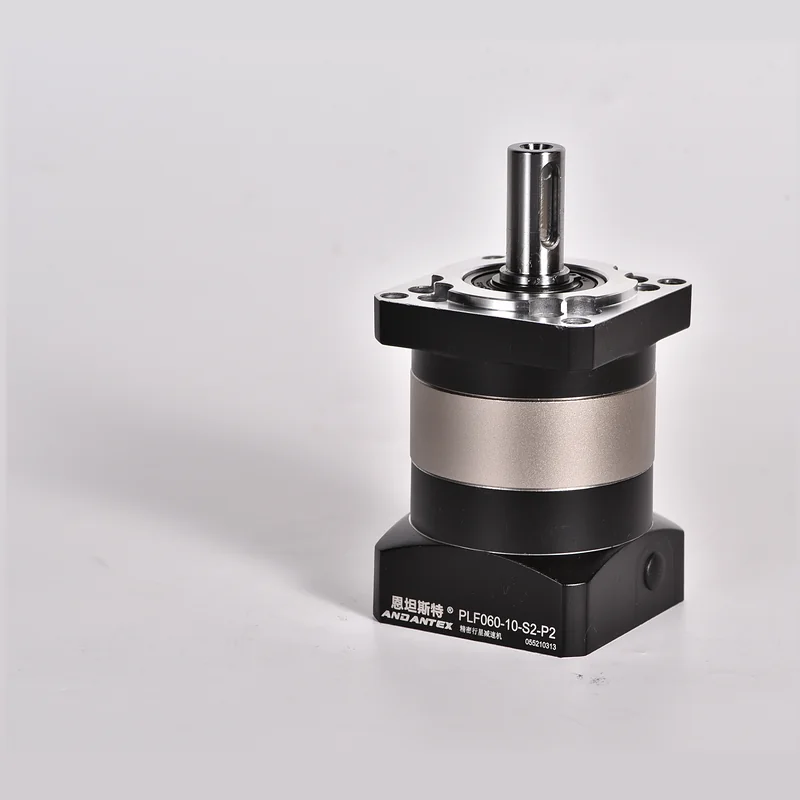
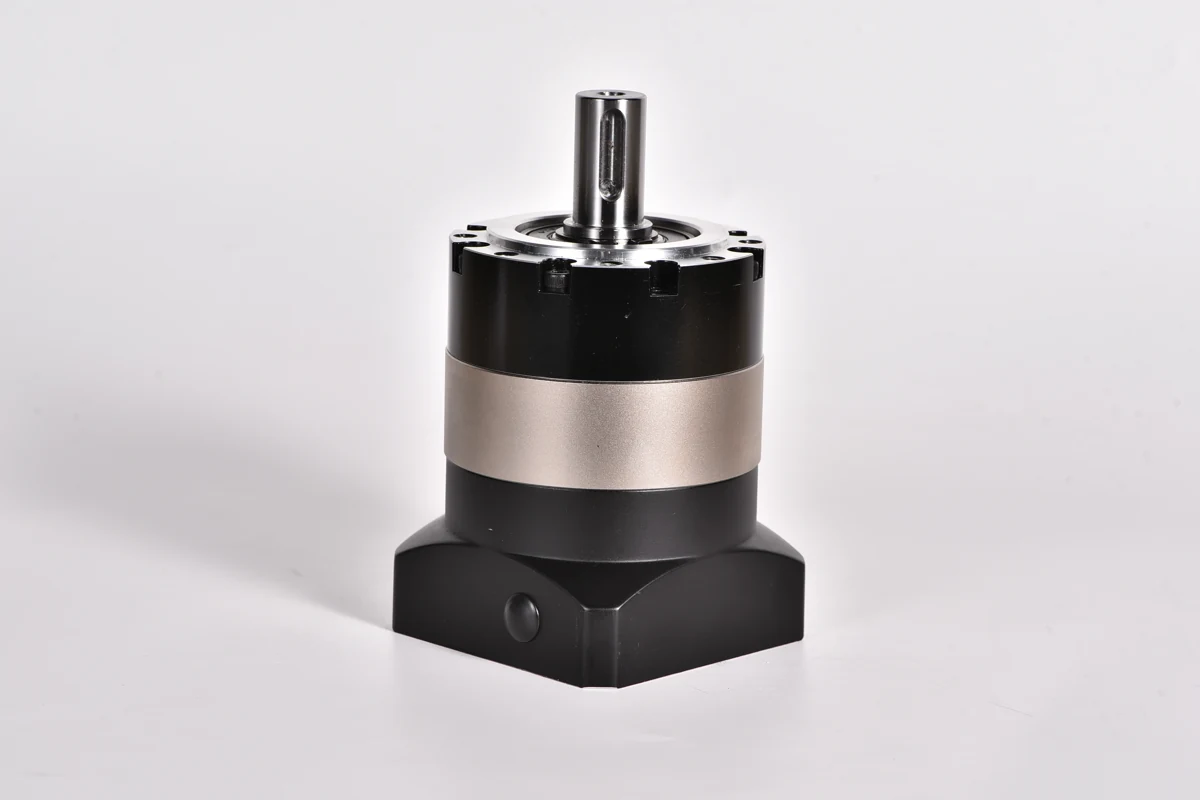
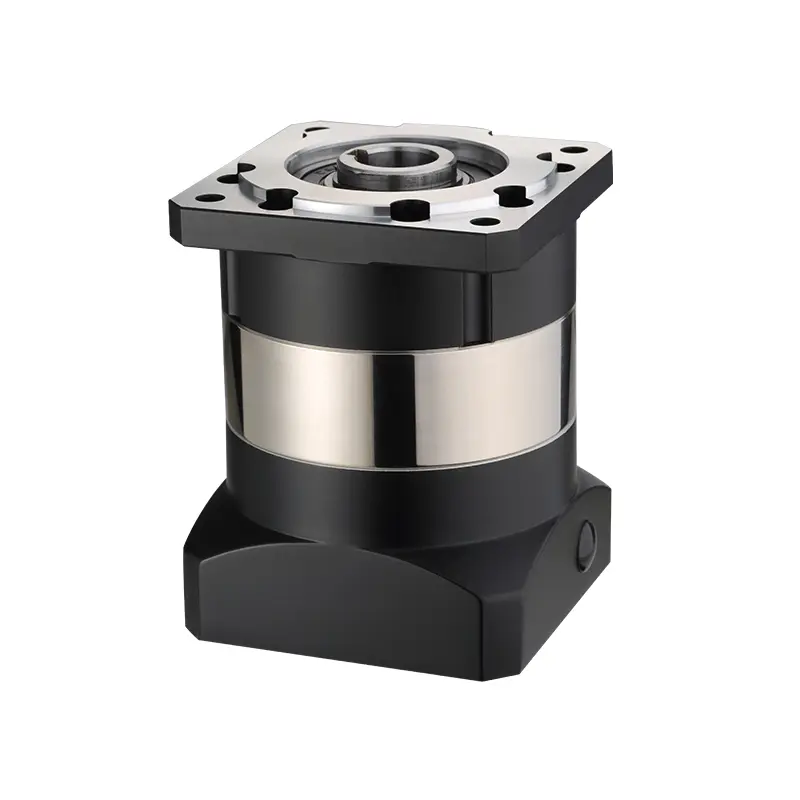
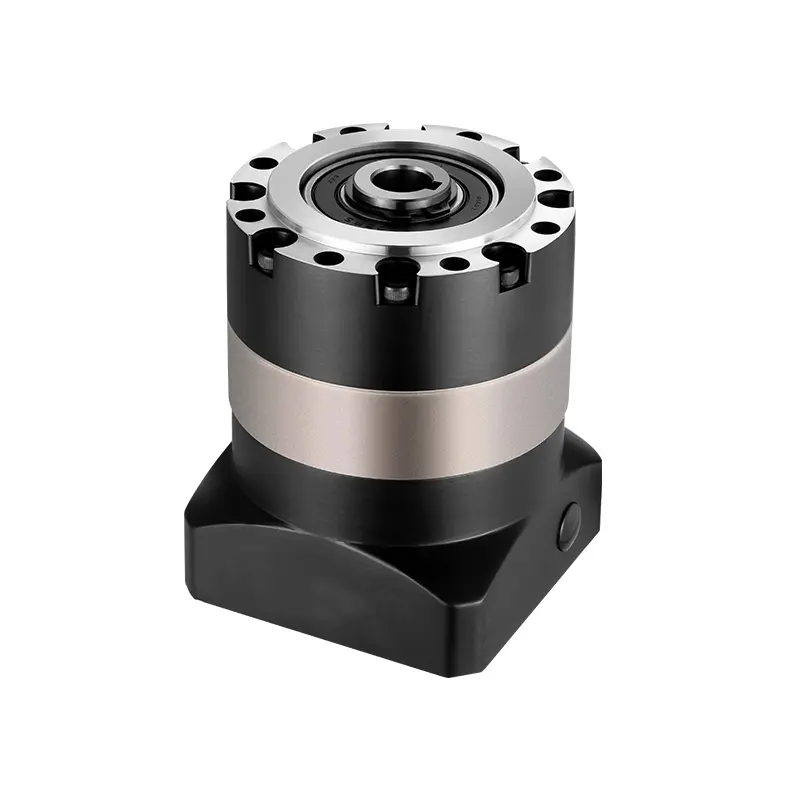
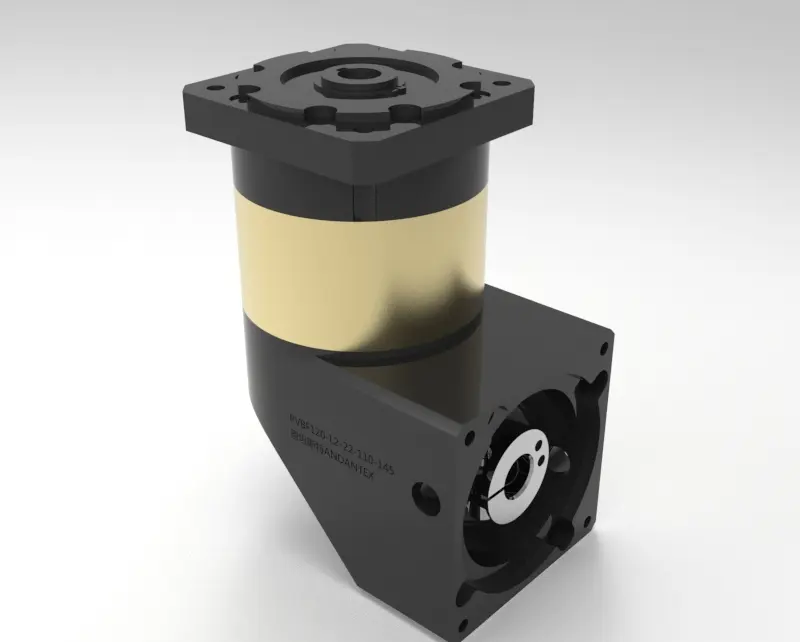
Sizing a planetary reducer starts with two core numbers: the gear ratio needed to match motor speed to load speed, and the required output torque after accounting for efficiency and duty cycle. Use the formulas and interactive calculator below to estimate a starting point before confirming inertia, peak acceleration torque, and radial/axial shaft loads.
1. Planetary Gearbox Gear Ratio Formula
In a standard fixed-ring planetary stage (sun gear input, planet carrier output, stationary ring gear), the gear ratio i is determined by the number of ring-gear teeth (Zr) and sun-gear teeth (Zs):
i = 1 + (Zr / Zs) = nin / nout
- Single-stage planetary gearboxes (L1) typically cover ratios from 3:1 to 10:1, offering the highest efficiency (around 95–97%), lowest backlash, and shortest housing length.
- Two-stage planetary gearboxes (L2) multiply two planetary stages in series to achieve 12:1 to 100:1 (for example, a 4:1 stage plus a 5:1 stage gives 20:1), with typical efficiency around 92–94%.
2. Output Speed & Output Torque Formulas
- Output Speed (rpm): nout = nin / i
- Motor Rated Torque (Nm) from Power (W): Tmotor = 9.55 × P(W) / nin(rpm)
- Theoretical Output Torque (Nm): Tout = Tmotor × i × η (where η is gearbox efficiency, e.g. 0.96 for L1 or 0.94 for L2)
- Required Gearbox Rated Torque (Nm): Treq = Tout × Ka (where Ka is the application service factor, typically 1.0–1.25 for steady uniform loads, 1.4–1.6 for moderate start/stop indexing, and 1.8–2.0+ for heavy shock or reversing loads)
3. Interactive Planetary Gearbox Ratio & Torque Calculator
Next step: Filter & compare gearbox models by torque, check your motor mounting interface, or request an engineering sizing check.
(function(){function calc(){var p=parseFloat(document.getElementById('axc-p').value)||0,n=parseFloat(document.getElementById('axc-n').value)||1,i=parseFloat(document.getElementById('axc-i').value)||1,eff=parseFloat(document.getElementById('axc-eff').value)||0.96,ka=parseFloat(document.getElementById('axc-ka').value)||1.2;var tm=9.55*p/n,nout=n/i,tout=tm*i*eff,treq=tout*ka;document.getElementById('axc-tm').textContent=tm.toFixed(2)+' Nm';document.getElementById('axc-nout').textContent=nout.toFixed(1)+' rpm';document.getElementById('axc-tout').textContent=tout.toFixed(1)+' Nm';document.getElementById('axc-treq').textContent=treq.toFixed(1)+' Nm';}['axc-p','axc-n','axc-i','axc-eff','axc-ka'].forEach(function(id){var el=document.getElementById(id);if(el){el.addEventListener('input',calc);el.addEventListener('change',calc);}});calc();})();
4. Single-Stage vs Two-Stage Planetary Ratios: Quick Selection Check
- Choose Single-Stage (L1, 3:1–10:1) when your target output speed is 300–1,000 rpm on a 3,000 rpm servo motor and you want minimum backlash and compact axial length.
- Choose Two-Stage (L2, 12:1–100:1) when you need higher torque multiplication or lower output speeds (30–250 rpm), and verify that peak acceleration torque stays within the gearbox's emergency-stop rating.
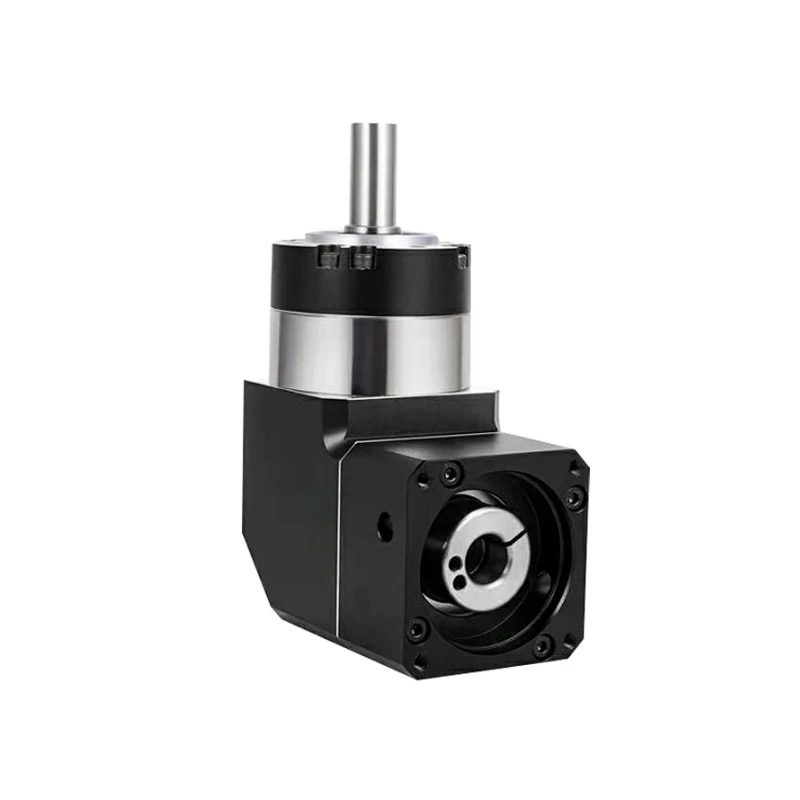
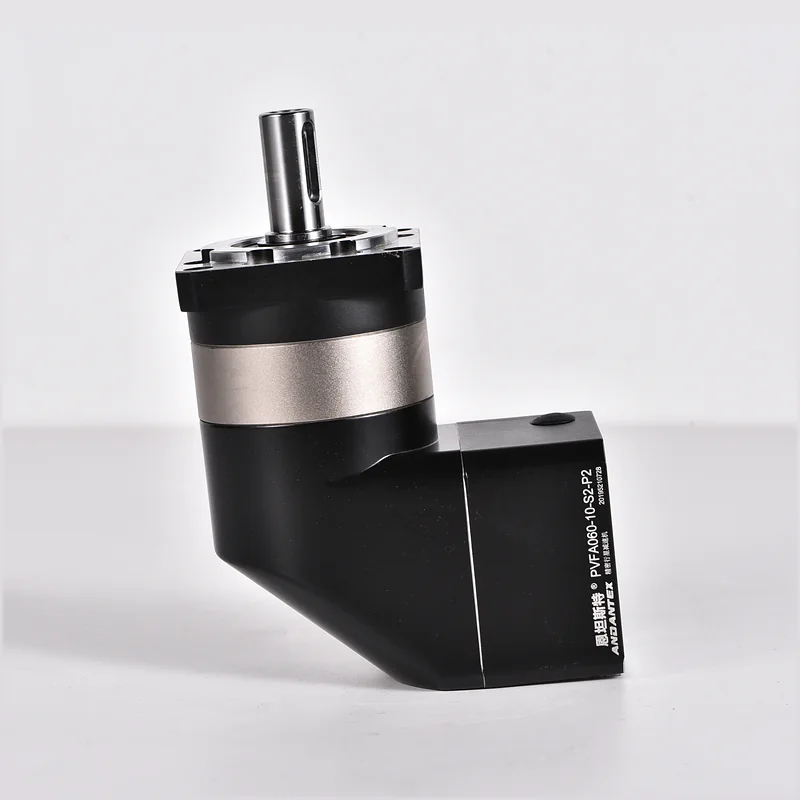
Explore our Standard Planetary Gearboxes for general automation, Precision Helical Planetary Gearboxes for low-backlash servo axes, or Right Angle Gearboxes when space requires a 90° layout.
Leave a Technical Question