 PRECISION DRIVE
A planet carrier supports the planet gears and locates their pins around the sun gear. In a common planetary reduction arrangement with the ring gear fixed and the sun gear driven, the carrier provides the reduced-speed output. Its job is structural as well as rotational: the gear teeth, planet bearings, pins and carrier must work together as a supported assembly.
This guide looks at planet-carrier components identified for ANDANTEX PAG060 and PAMG planetary gearboxes. It focuses on the carrier, its material specification and the questions a machine builder should ask when comparing gearbox constructions. For the complete mechanism, see how a planetary gearbox works.
What is the difference between a planet gear and a planet carrier?
| Component | Function | What to check |
|---|---|---|
| Planet gear | Meshes with the sun and ring gears. | Tooth geometry, gear material and tooth condition. |
| Planet pin and bearing | Support the planet gear as it turns relative to the carrier. | Bearing arrangement, fits and lubrication. |
| Planet carrier | Locates the planet pins and connects the assembly to its input or output member. | Pin locations, support geometry and connection details. |
The carrier is also called a planetary carrier. It is not the internal ring gear and should not be confused with the complete gearbox housing. Which member is fixed, driven or used as the output determines the operating arrangement.
Inside the PAG060 and PAMG carrier examples
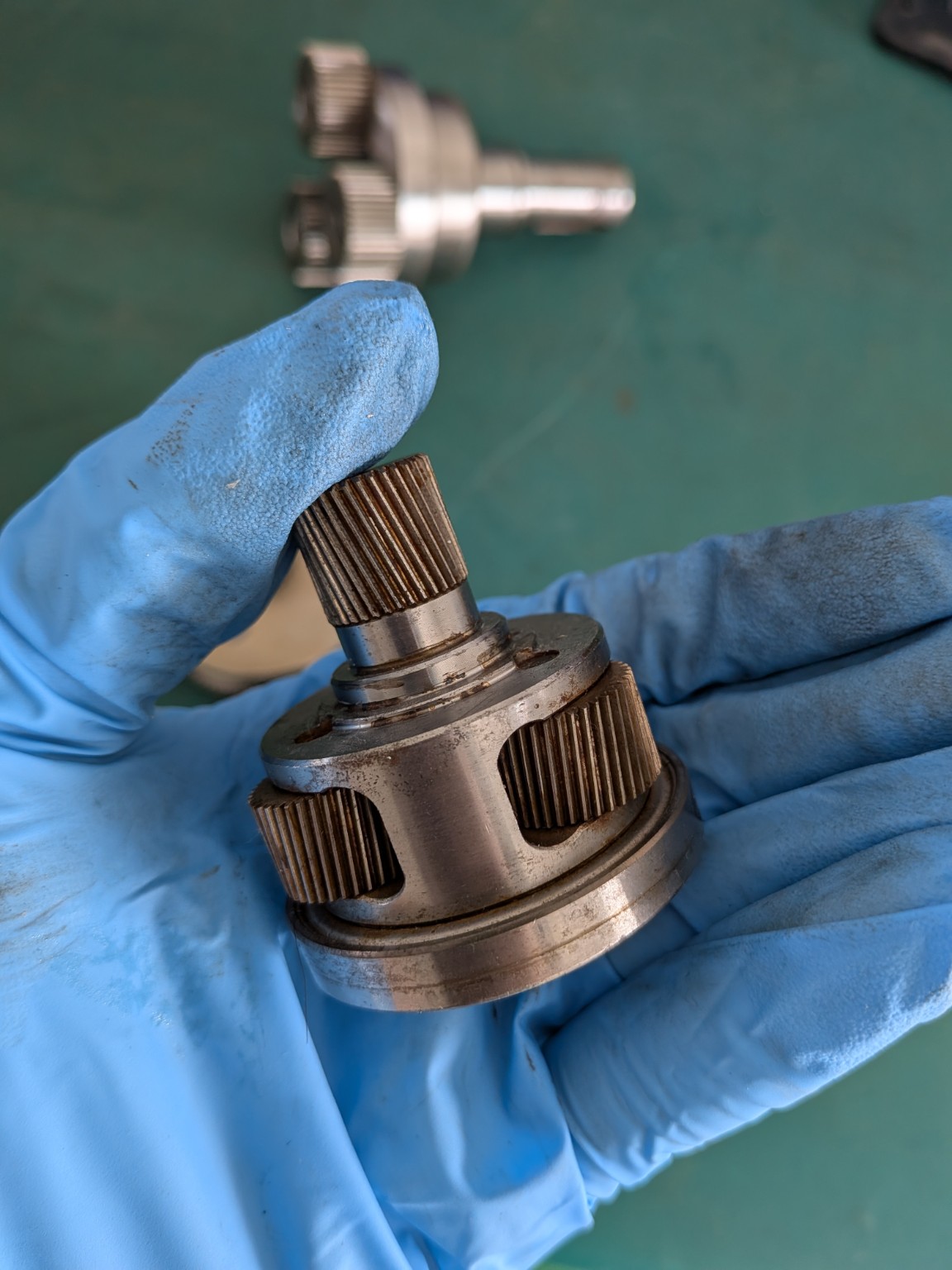
The photographs show exposed planet gears within the carrier openings and the surrounding support structure. The carrier in the examples supplied is made from alloy steel. These are component photographs; the internal ring gear and the complete assembled transmission are not shown.
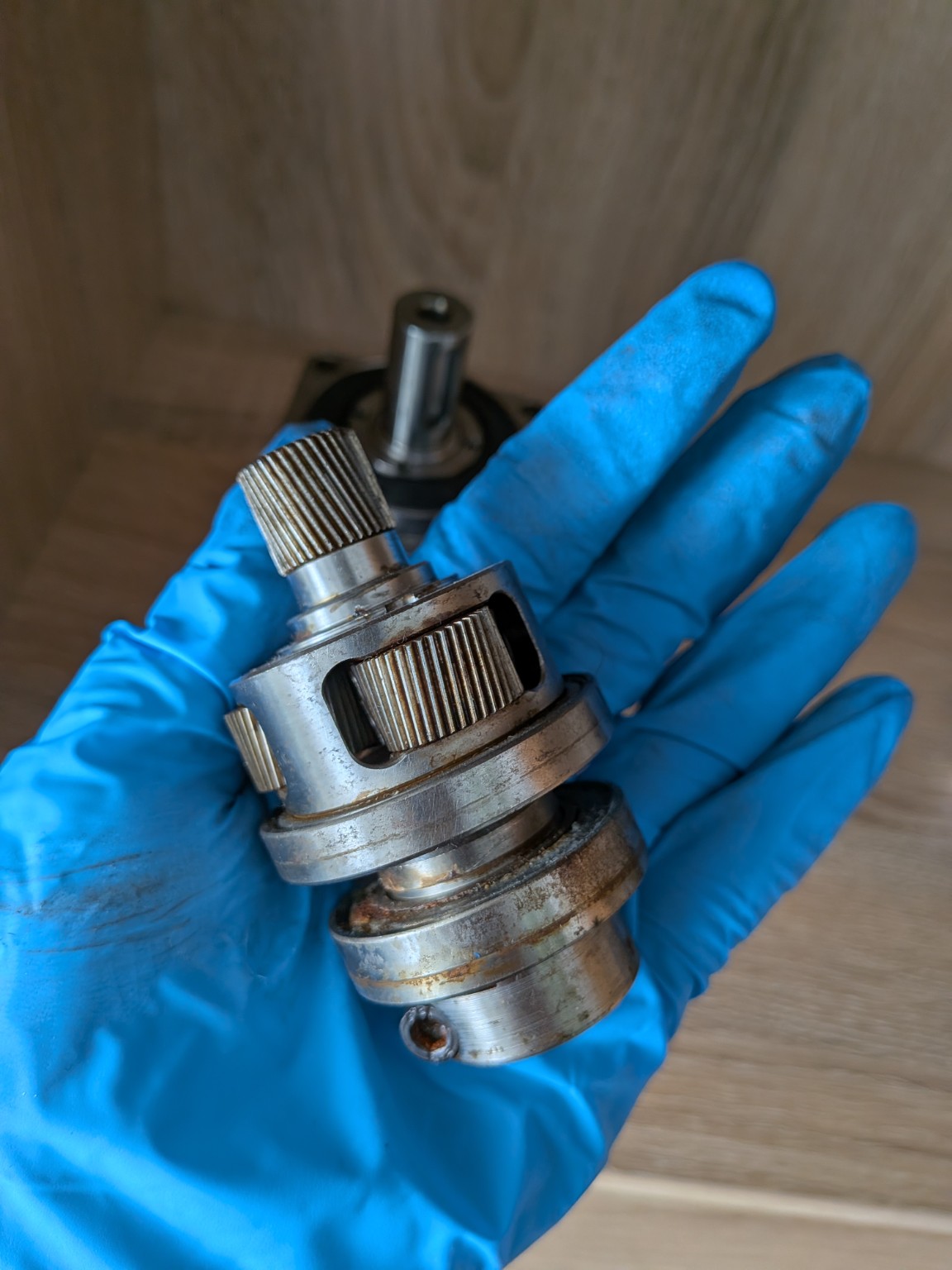
Use the model and configuration drawing to identify the exact assembly for an order. Similar-looking carriers do not establish that two gearbox configurations have interchangeable components.
Specify gear material and carrier material separately
In the PAG060 and PAMG examples supplied, the gears are made from chromium-molybdenum steel (Cr-Mo steel), while the planet carrier is made from alloy steel. The specified gear hardness is above 50 HRC. These material descriptions refer to the illustrated components; the exact steel grade should be confirmed against the selected model’s component specification.
A gear-material specification and a carrier-material specification describe different parts. A useful drawing or purchase specification identifies each component, its steel grade and any required heat treatment. The phrase “alloy steel” identifies a material family; the exact grade provides a more precise basis for engineering review.
Hardness also needs a complete definition. Record the hardness scale, acceptance range and measurement location, distinguishing the gear-tooth surface from the core or carrier. A hardness value without its scale and location cannot be used as a complete acceptance requirement. KHK’s gear technical guidance likewise distinguishes material, heat treatment and the area to be hardened.
What should a machine builder request?
- Exact configuration: gearbox model, ratio, stage arrangement and motor interface.
- Component specifications: separate material requirements for gears, pins and carrier, plus the applicable bearing arrangement.
- Inspection requirements: drawing references, hardness scale and location where specified, and the documents needed for acceptance.
- Application information: working torque, peak torque, speed, reversals, operating cycle and the load attached to the output.
For a machine enquiry, compare the PAG planetary gearbox series and PAMG right-angle planetary gearbox series, then confirm the selected model against its drawing. The servo planetary gearbox selection guide explains the broader selection workflow.
Frequently asked questions
Is the planet carrier always the output?
No. It is the output in the common fixed-ring, sun-input reduction arrangement discussed here. Other planetary arrangements can use different fixed, input and output members.
Does a higher gear-hardness number prove a higher gearbox torque rating?
No. Compare the complete selected gearbox specifications and operating conditions. A material or hardness statement alone does not establish the rating of the assembled gearbox.
Can these photos confirm the reduction ratio?
No. Use the configuration drawing and model information. These photographs document the carrier and visible gear components rather than every member of the operating transmission.
Send your required model, motor drawing and operating conditions to request a gearbox engineering review. For a custom interface or a specific material requirement, include the relevant component drawing and inspection requirements.
General technical references: KHK planetary gear arrangements and KHK gear material and heat-treatment guidance. Product photographs and the gear and carrier material descriptions relate to the supplied ANDANTEX examples.
Leave a Technical Question