 PRECISION DRIVE
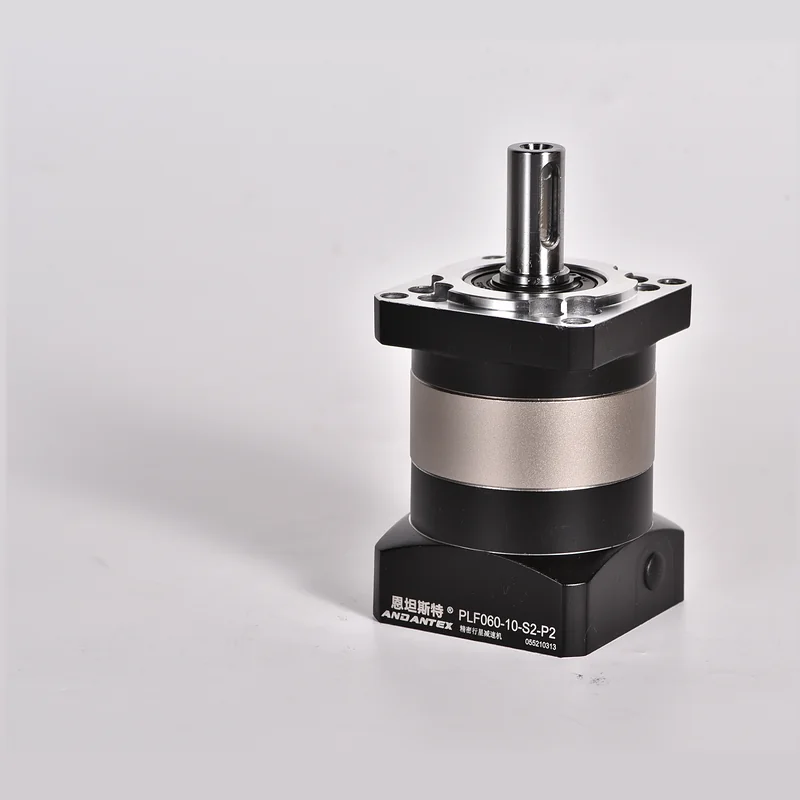
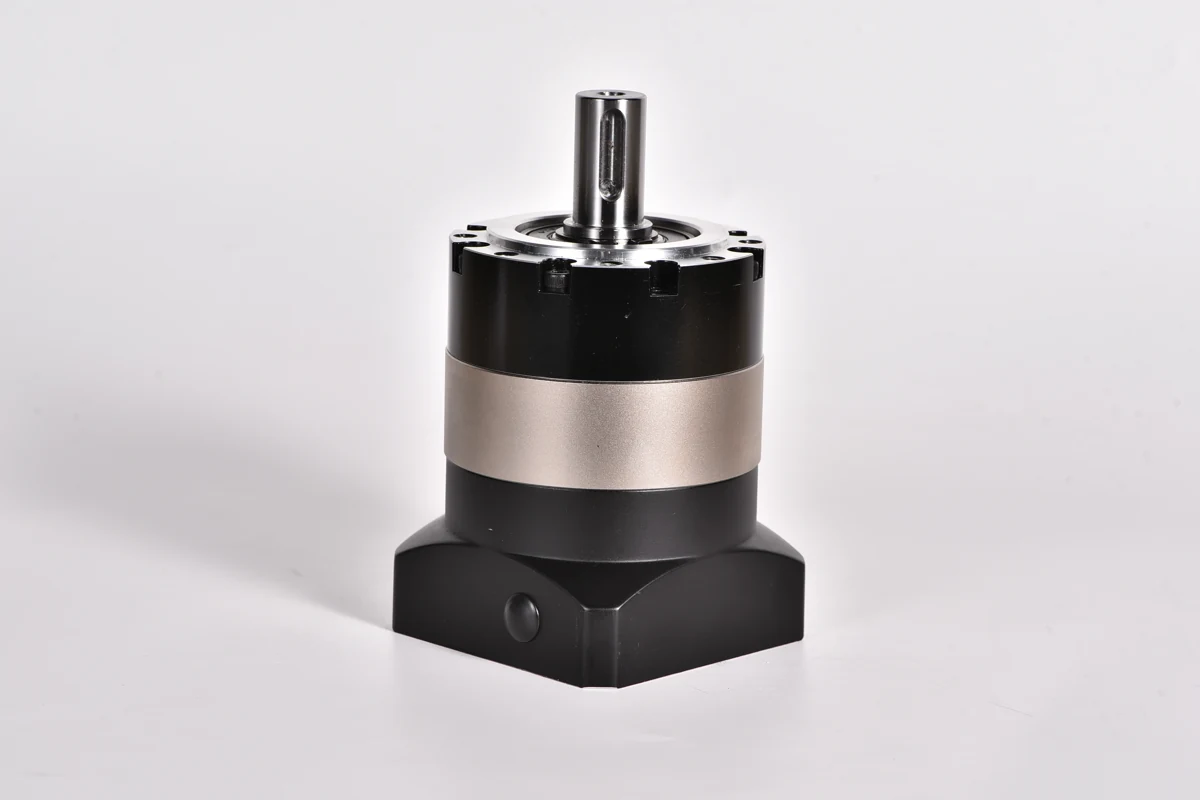
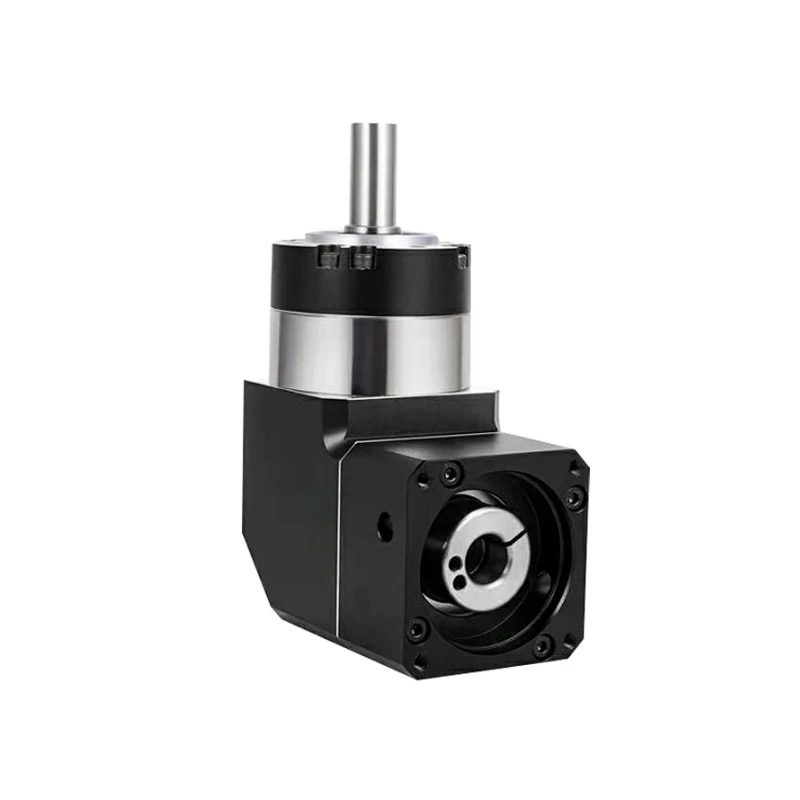
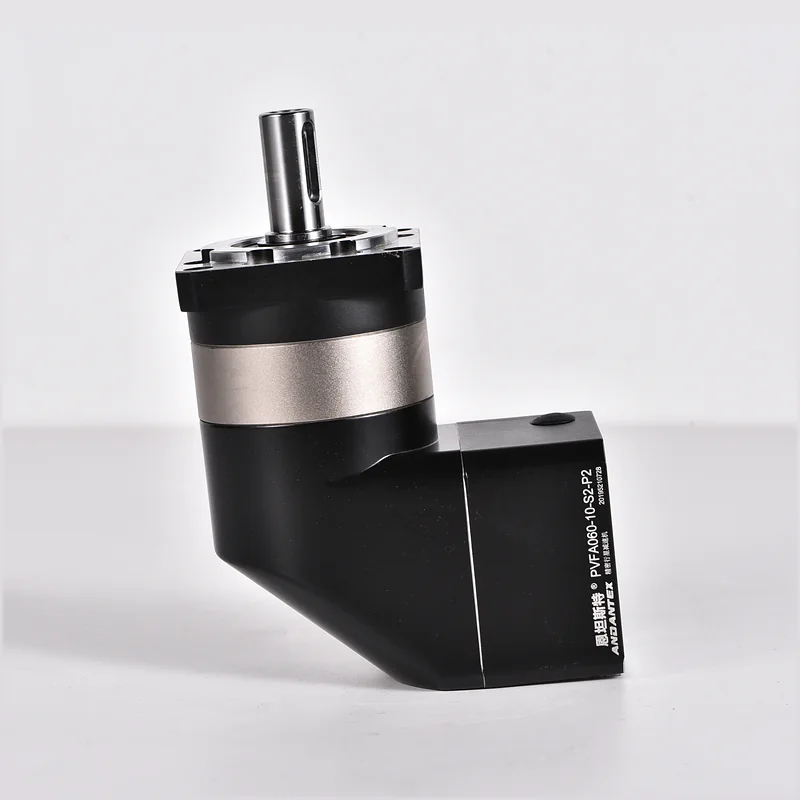
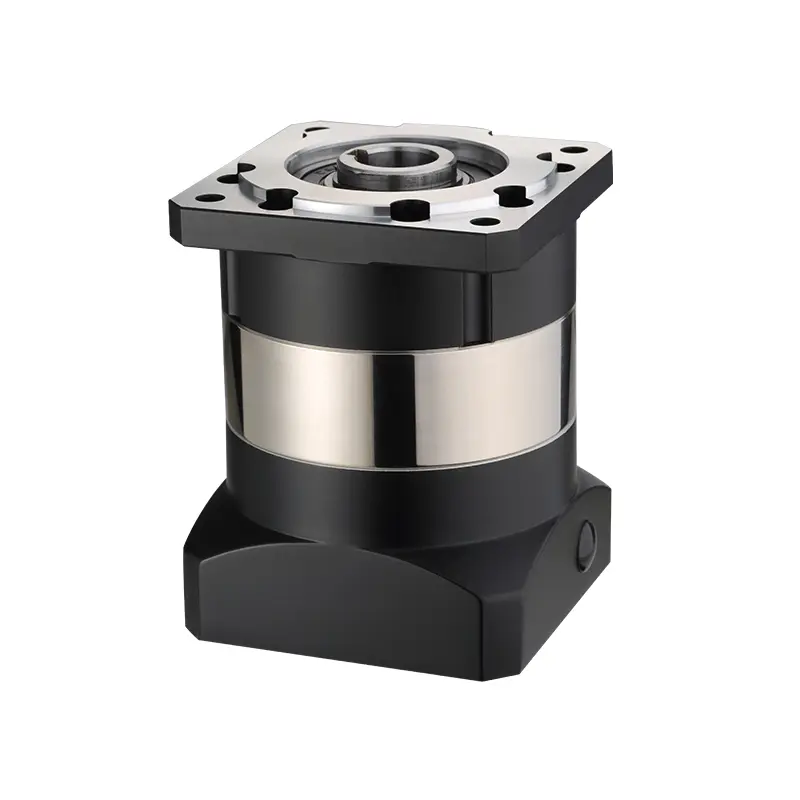
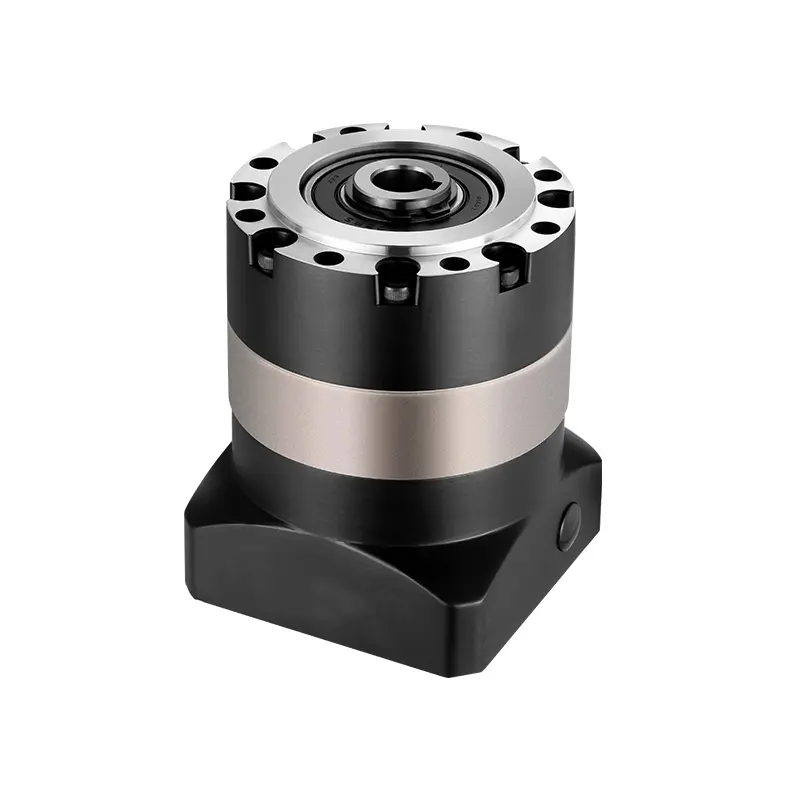
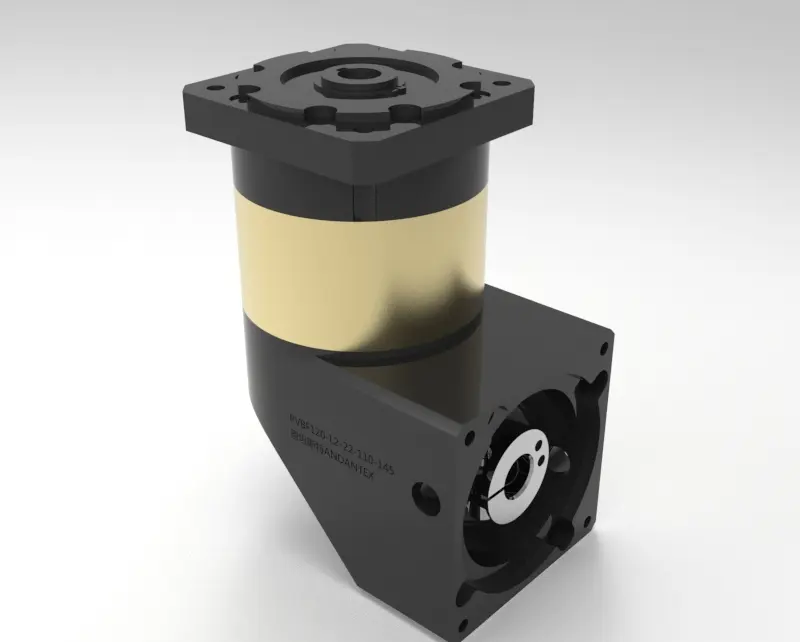
Standard single-stage (3:1–10:1) and two-stage (12:1–100:1) planetary reducers cover most high-speed servo axes. Yet mixers, solar trackers, turntable positioners, rotary ovens, and heavy valve actuators often demand continuous ultra-slow 1–5 rpm output speed under high torque (> 300 N·m) and heavy overhung radial load (> 5,000 N)—requiring 100:1 up to 1,440:1 reduction. Stacking two worm gearboxes in series ruins efficiency (~30%) and overheats; pairing a helical planetary + spiral bevel front-end (PLM090 + PVFH090) onto a robust NMRV90 worm stage—or combining PLM + KRV—delivers 1,440:1, 325 N·m, and 6,160 N radial support in either an inline or axial-space-saving 90° side-mount motor layout.
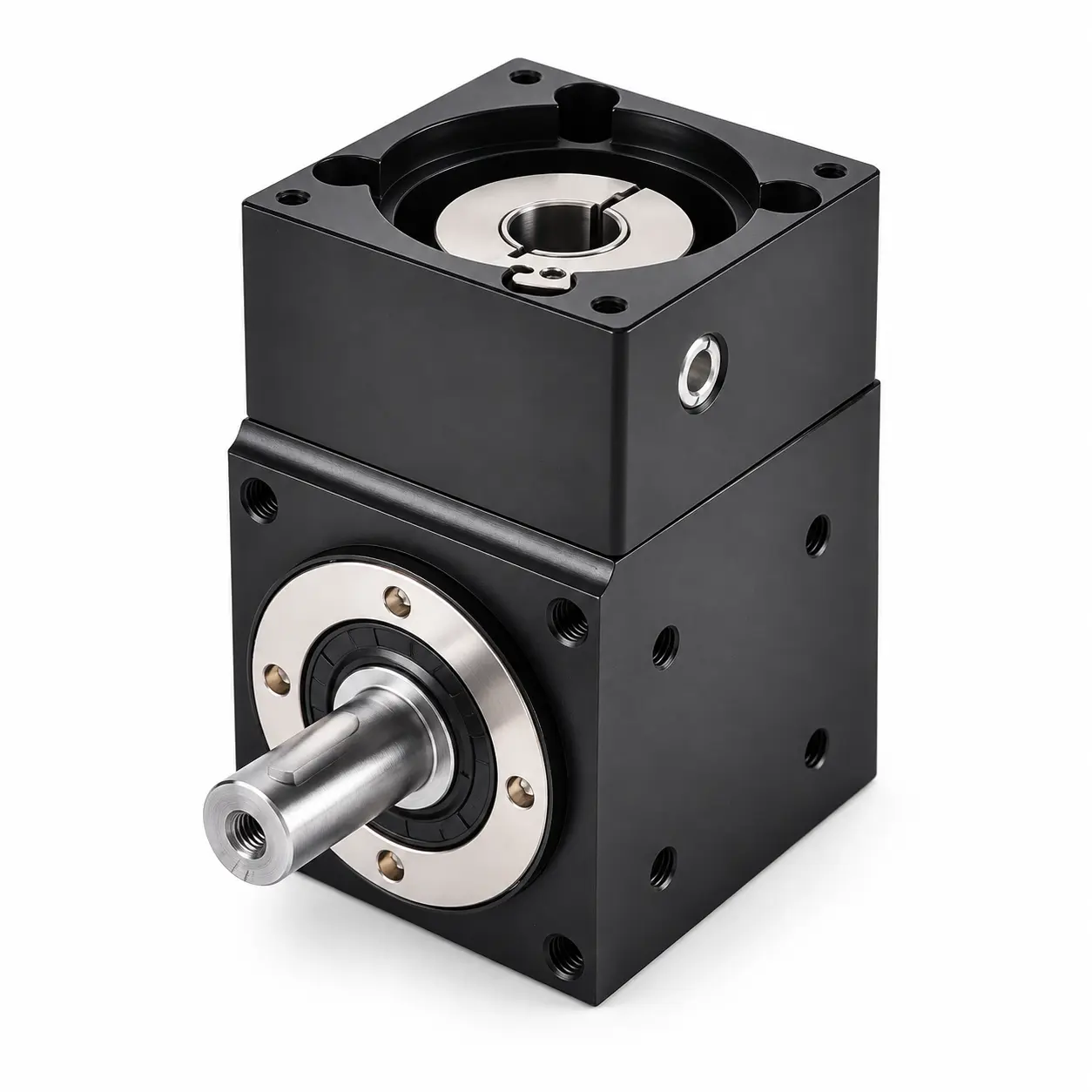
1. Why Double-Worm (NMRV + NMRV) Fails Above 200:1 — And How 3-Stage Hybrid Combos Fix It
When designers try linking two high-ratio worm reducers back-to-back (40:1 × 30:1 = 1,200:1), two physical penalties occur:
- Collapsing Compound Efficiency (ηtotal ≈ 0.55 × 0.55 ≈ 30%): Nearly
70%of input power turns directly into gearbox housing heat, forcing an oversized motor just to overcome internal sliding friction. - Input Tooth Shock Risk: The output worm experiences magnified torque ripple unless a smooth helical planetary or spiral bevel pre-stage steps speed down cleanly before entering the final
60:1worm mesh.
By placing high-efficiency (~95–97%) helical planetary and spiral bevel stages (8:1 and 3:1) upstream of a 60:1 NMRV90 stage, the high-speed input stages waste almost zero thermal energy while multiplying torque safely into the heavy worm output stage:
Figure 1: Inline vs. 90° side-mount 3-stage 1,440:1 drive trains achieving 2 rpm output, 325 N·m torque, and 6,160 N overhung capacity.
2. Comparing Inline vs. 90° Side-Mount Motor 1,440:1 Combo Configurations
ANDANTEX offers both architectural orientations with identical 325 N·m load torque and 6,160 N output radial capacity—depending solely on machine cabinet clearances:
| Selection Parameter | Inline Input Version (RV90-60-PLM090-8-PVFH090-3) | 90° Side-Mounted Version (RV90-60-PVFH090-8-PLM090-3) | All-Helical / Hypoid Alternative (PLM + KRV) |
|---|---|---|---|
| Product Link | RV90-60-PLM090-8-PVFH090-3-19-70-90 | RV90-60-PVFH090-8-PLM090-3-19-70-90 | PLM + KRV Hypoid |
| Power Flow Sequence | Servo (19-70-90) Inline PLM090 (8:1) PVFH090 (3:1) NMRV90 (60:1) | Servo (19-70-90) PVFH090 (90° turn) PLM090 NMRV90 (60:1) | Precision helical planetary pre-stage heavy servo hypoid final stage |
| Total Ratio & Speed | 1,440:1 (2 rpm at 2,880 rpm motor input) | 1,440:1 (2 rpm at 2,880 rpm motor input) | Custom 100:1–1,000:1 low-backlash multi-stage combos |
| Load & Radial Limits | 325 N·m torque · 6,160 N output radial force | 325 N·m torque · 6,160 N output radial force | High bidirectional stiffness (check KRV size table) |
| Cabinet & Backup Advantage | Keeps motor body parallel to drive housing; supports motor or hand-crank input | Folds motor 90° sideways to save axial cabinet depth; also supports hand-crank | Higher efficiency (> 88–92% compound) for reversing CNC cycles (see KRV vs NMRV or L1 vs L2 guide) |
3. Critical Torque-Limiter & Custom Motor Interface Warnings for High-Ratio Combos
- Never Size the Motor to Stall the Output Shaft: At
1,440:1, even a modest100 W–400 Wmotor generates thousands of Newton-meters theoretically if jammed mechanically. Protect driven shafts with servo current-torque limits or mechanical overload clutches so stall peaks never exceed the325 N·moutput rating. - Custom Input Interface From 1 Unit (
MOQ = 1): Both1,440:1assemblies ship natively with19-70-90(80 mmservo flange) input hardware; if your motor, handwheel shaft, or hydraulic drive uses different shaft/bolt dimensions, ANDANTEX custom-machines the input flange and clamping collar starting from 1 unit (MOQ = 1) (OEM Desk / RFQ).
Frequently Asked Questions (FAQ)
Q1: What is the difference between RV90-60-PLM090-8-PVFH090-3 and RV90-60-PVFH090-8-PLM090-3?
Both deliver 1,440:1 reduction (2 rpm at 2,880 rpm), 325 N·m load torque, and 6,160 N output radial capacity. The PLM090-first model mounts the motor inline along the primary housing axis, whereas the PVFH090-first version turns the motor 90° sideways to shorten overall axial length.
Q2: Can these 1440:1 combo gearboxes be operated with a manual hand crank?
Yes. Both configurations are built for continuous low-speed rotation and support servo motor or manual hand-crank input (where output RPM scales proportionally with crank input RPM).
Q3: When should I choose PLM + KRV instead of a worm combo like PLM + NMRV90?
Choose a PLM + KRV servo hypoid combo when you need rapid bidirectional servo reversing, ≤ 1–3 arcmin positioning backlash, and higher mechanical efficiency (> 88%).
Leave a Technical Question