 PRECISION DRIVE
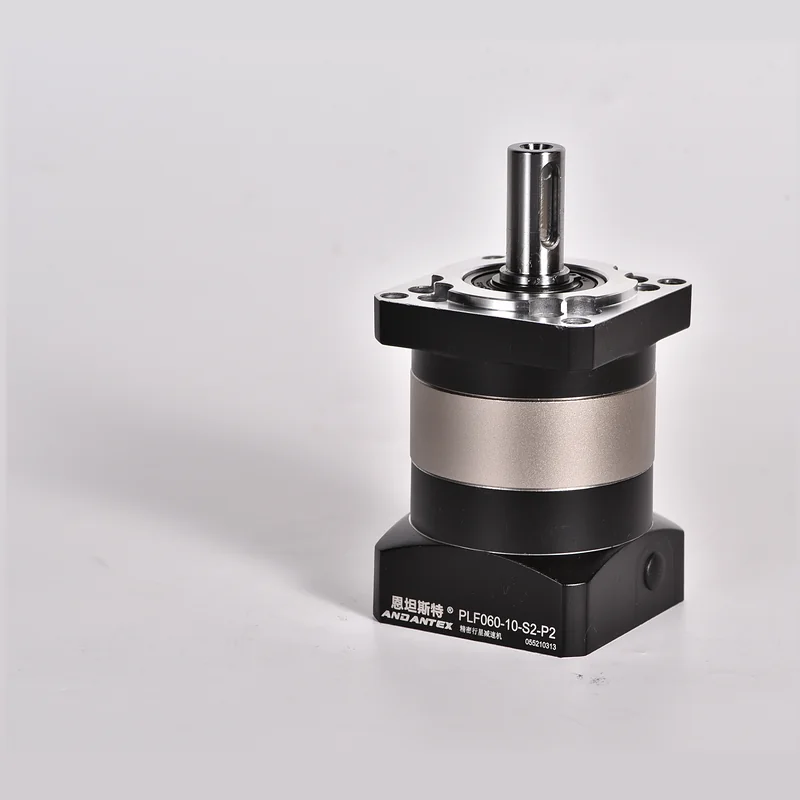
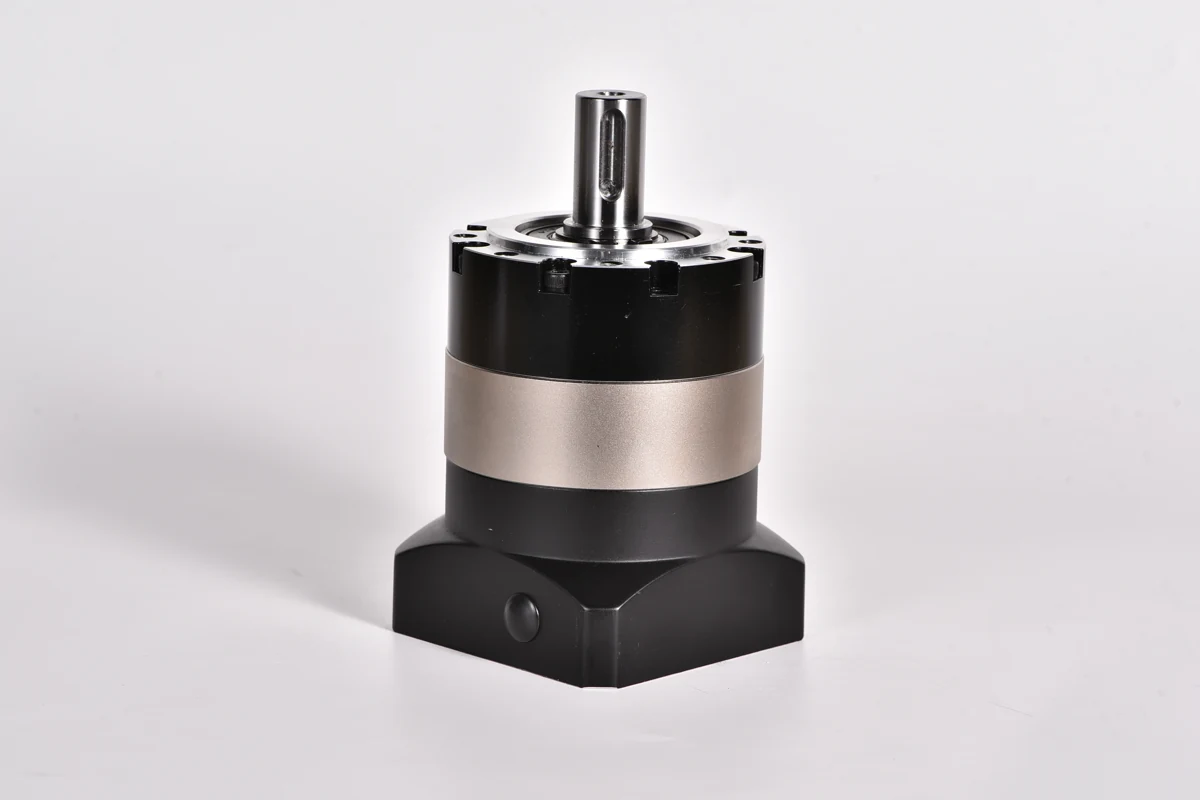
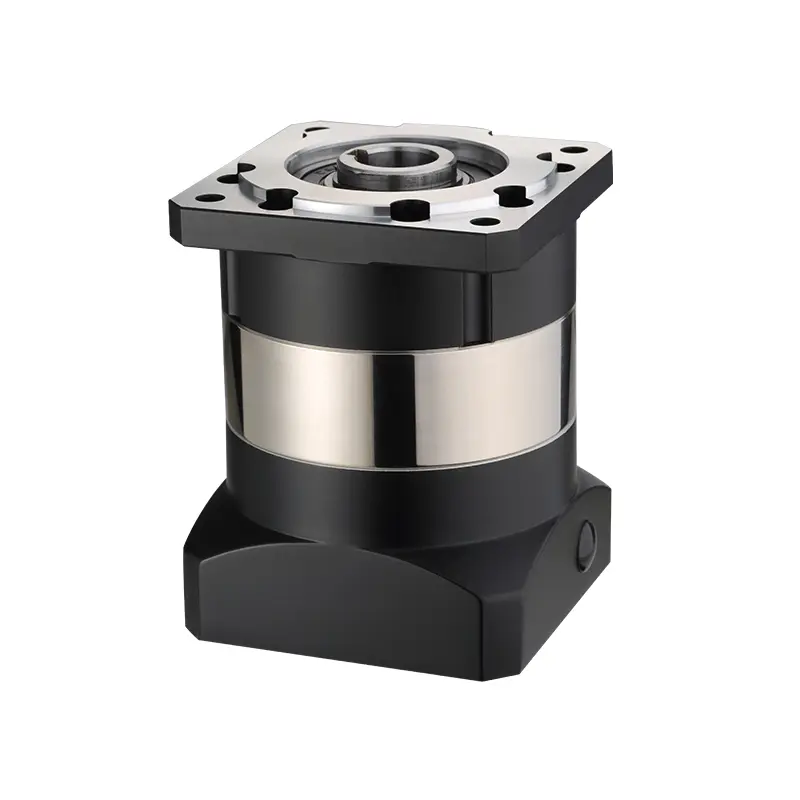
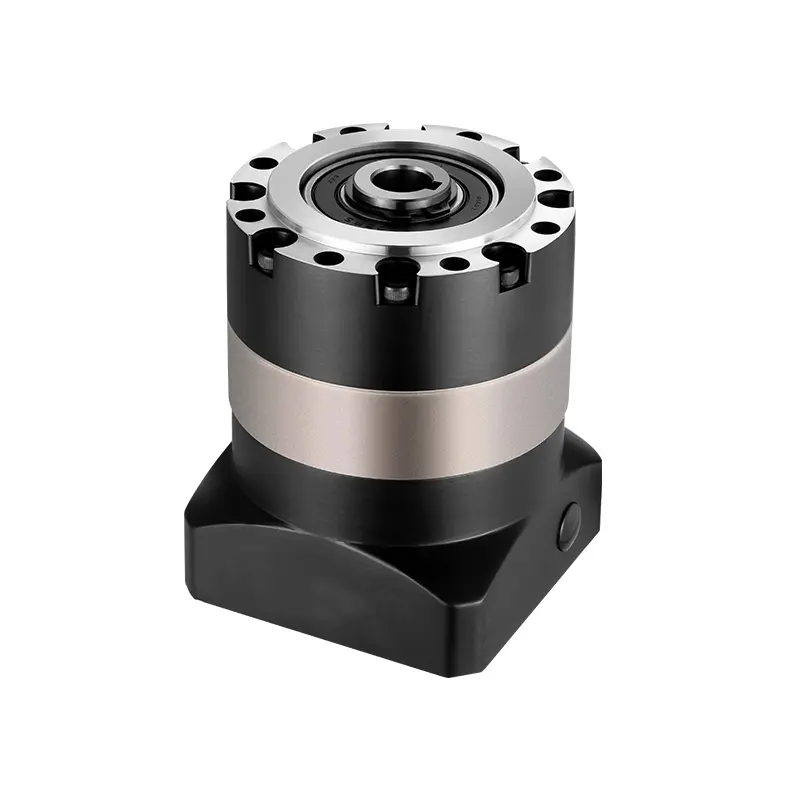
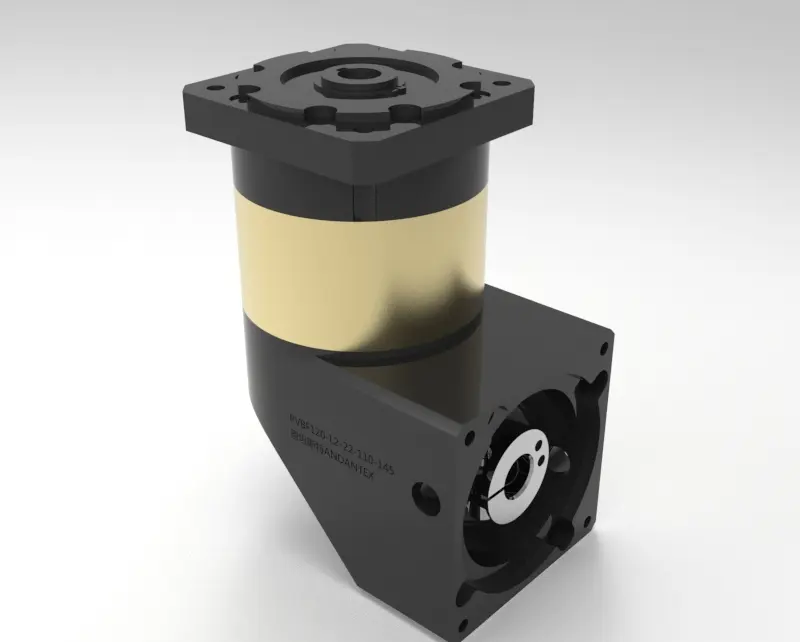
To step a 3,000 rpm motor down to 150 rpm, you need a 20:1 reduction ratio (a compact two-stage L2 planetary housing)—keeping in mind that only synchronous AC servos deliver exactly 150.0 rpm, whereas a 2-pole AC induction motor spinning at 2,820–2,880 rpm outputs 141–144 rpm unless trimmed with a VFD. For your second sizing case—delivering 60 rpm at 40 Nm with a 400 W motor—the mechanical load power is 251.3 W: pairing a 400 W, 3,000 rpm servo with a 50:1 helical or spur planetary gearbox (94% efficiency, drawing ~267 W) works comfortably up to 59.7 Nm continuous, whereas a low-efficiency 50:1 worm reducer (~58%) demands 433 W and stalls or overheats the motor.
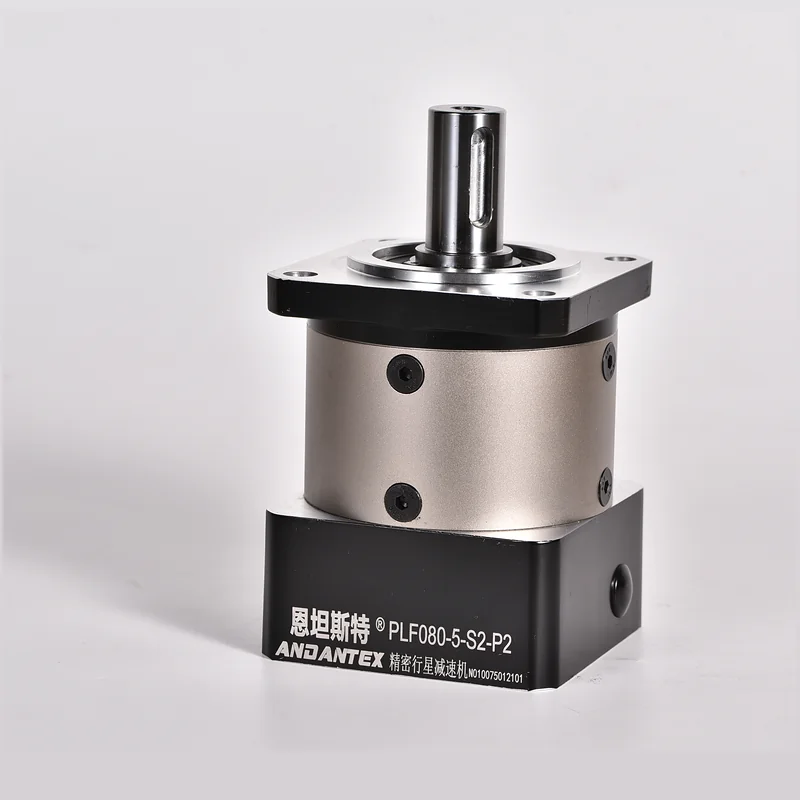
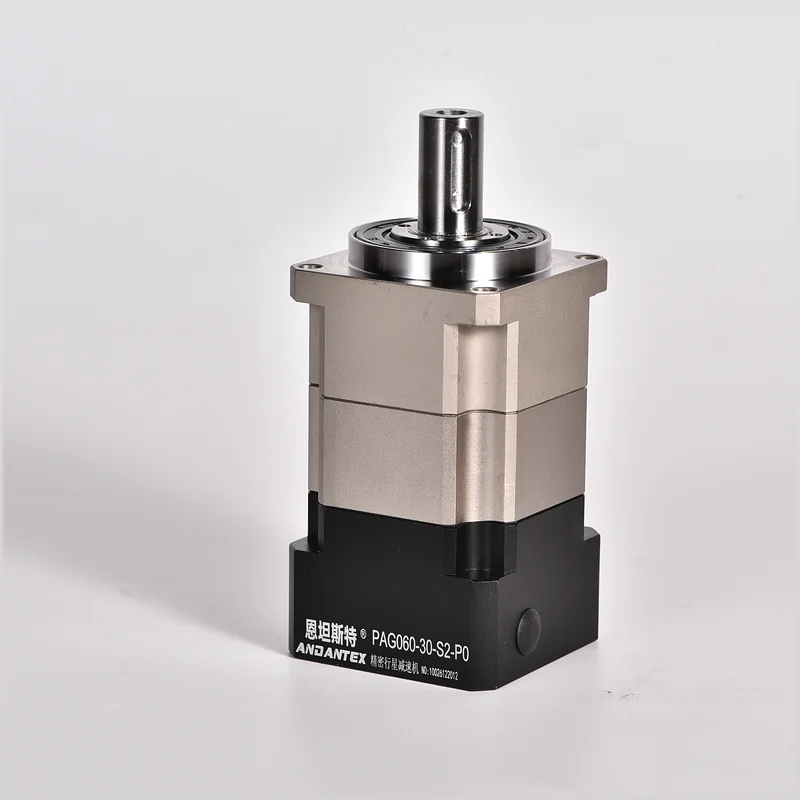
1. Sizing 3,000 RPM to 150 RPM: Why 20:1 Is Always Two-Stage (L2)
From the fundamental speed rule i = n_motor / n_output = 3,000 / 150 = 20:1, single-stage planetary reducers (L1) cover 3:1 through 10:1, so 20:1 always requires a two-stage (L2) configuration (90–94% efficiency). Before ordering any 20:1 gearbox, check what type of 3,000 rpm motor sits on the machine:
- AC Servo Motor (
3,000 rpmSynchronous Rated): At3,000 rpm, output speed hits exactly150.0 rpm, with transient bursts up to250–300 rpmwhen peaking near5,000–6,000 rpm. Pair directly with PLF060, PAG060, PLF090, or disc-flange PLX090. - 2-Pole 50 Hz AC Induction Motor (
2,820–2,880 rpmUnder Load): Full-load rotor slip drops a20:1reducer to141–144 rpm; run the VFD near52–53 Hzif an exact150 rpmconveyor line speed is required, or test candidates in our Planetary Gearbox Ratio & Torque Calculator.
2. Feasibility Check: Can a 400 W Motor Deliver 60 RPM and 40 Nm?
Check mechanical output power first using P_out (W) = T_out (Nm) × n_out (rpm) / 9.55:
Required Output Power = 40 Nm × 60 rpm / 9.55 = 251.3 W
Next, divide 251.3 W by gearbox efficiency (η) to see what your 400 W motor actually must supply—this explains why motor wattage alone never guarantees a fit (see why motor power alone is misleading):
| 50:1 Gearbox Pairing on 400 W Servo (3,000 rpm, 1.27 Nm rated / 3.82 Nm peak) | Transmission Efficiency | Motor Power Required for 60 rpm, 40 Nm | Continuous Rated Output Torque | Verdict & Frame Choice |
|---|---|---|---|---|
50:1 Planetary (PLF / PAG) | 94% (90–94% L2) | 267 W (33% thermal headroom) | 59.7 Nm continuous from motor | Pass cleanly — step into PLF080-50 / PLF090-50 (122 Nm) for shock margin |
50:1 Compact Planetary (PLF060-50 / PAG060-50) | 94% | 267 W | Box rated 40–45 Nm (60 Nm max) | Tight limit — 40 Nm uses 100% rating; 300% servo peaks reach ~179 Nm |
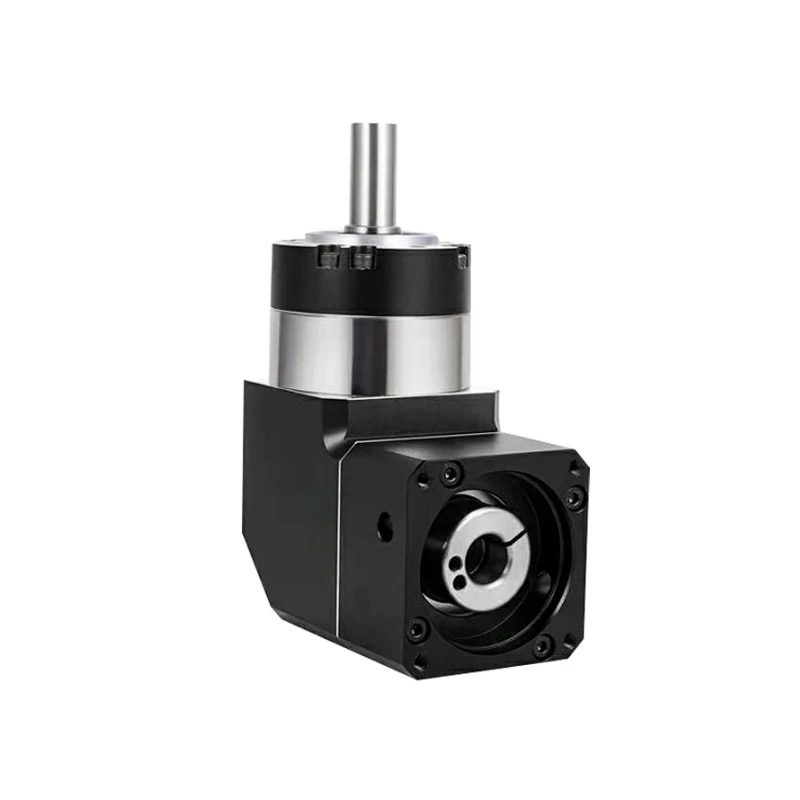
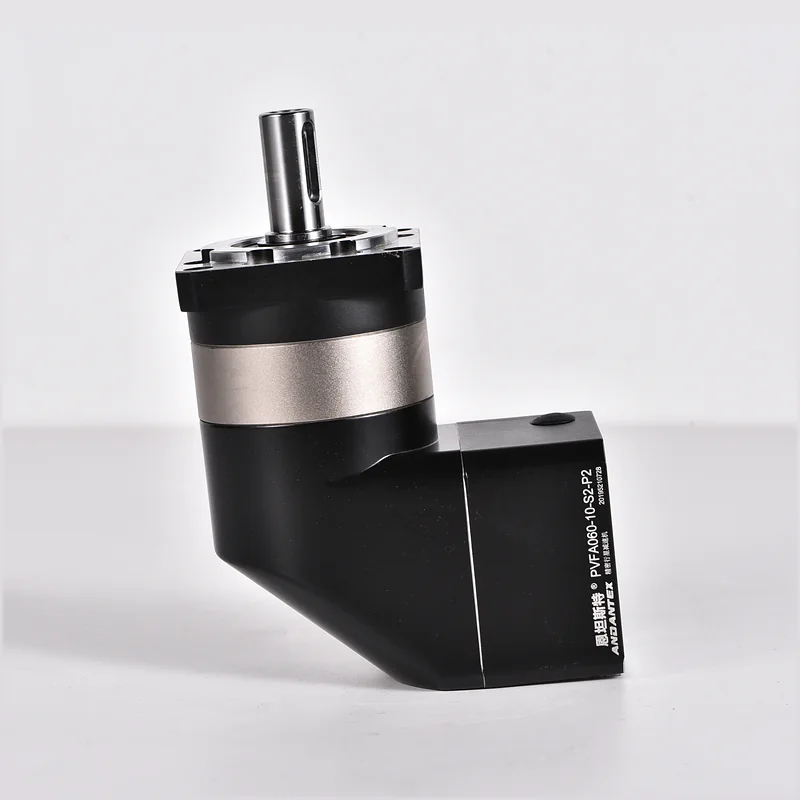
50:1 Servo Hypoid (KRV Series) | ~85% | 296 W | 54.0 Nm continuous from motor | Pass — solid right-angle alternative when inline depth is tight |
50:1 Conventional Worm (NMRV) | ~55–60% | 419–457 W (> 400 W!) | Insufficient & heavy heat rise | Fail / Overloads motor — switch to planetary or increase motor to 750 W |
3. Four Checks Before Ordering Your 400 W Gearbox Assembly
- Check Both Continuous Torque and Acceleration Peak Torque: A standard
400 Wservo outputs1.27 Nmcontinuous and3.82 Nmpeak (300%overload). Across a50:1planetary reducer, theoretical motor peak reaches179 Nm—always size continuous rating and acceleration peaks separately (read Rated vs. Peak Torque rules) and clamp drive current limits if using a060box. - Watch the
60:1vs.50:1Speed Trade-Off: Standard planetary series offer40:1,50:1, and70:1(L2), not always60:1. At50:1, your3,000 rpmmotor runs continuously at3,000 rpmfor60 rpmout; if variable speed down to5 rpmis needed later, see our 5–50 rpm Variable-Speed Ratio Sizing Guide. - Remember 4-Pole
1,450 rpmAC Motors Differ Completely: If your existing400 Wunit is a 4-pole AC induction motor (~1,450 rpm) rather than a3,000 rpmservo, a25:1ratio gives~58 rpmand outputs~2.6 Nmat the motor shaft—verify motor RPM on the nameplate first via our Motor Brand Selector. - Keep Your Existing Motor With
MOQ = 1Input Flanges: Standard400 Wservos carry a14-50-70flange stocked onPLF060 / PAG060 / PLF080—and odd non-standard motors ship with a 1-unit custom CNC flange in 3–5 working days.
Frequently Asked Questions (FAQ)
Q1: Why is 20:1 always two-stage (L2) while 10:1 can be single-stage (L1)?
In single-stage planetary gearsets, going above 10:1 forces an impractically tiny sun gear tooth count and excessive root stress. Two-stage (L2) designs split 20:1 cleanly into 4:1 × 5:1—check our Single-Stage vs. Two-Stage Planetary Comparison for exact efficiency and length differences.
Q2: Can a PLF060-50 safely handle 60 rpm and 40 Nm if my load is completely steady?
Because PLF060-50 is rated at 40 Nm continuous (60 Nm peak), running at 40 Nm leaves zero safety factor against cold grease drag, startup inertia, or line surges. Stepping up one frame to PLF080-50 or PLF090-50 (122 Nm rated) ensures long 20,000 h bearing life, as explained in our frame-torque comparison guide.
Q3: What information should I send ANDANTEX to lock an exact part number?
Submit your exact motor nameplate model, target output RPM range, and peak acceleration time to our Engineering RFQ Desk for a confirmed 2D PDF, STEP file, and 3–5 day stock quote.