 PRECISION DRIVE
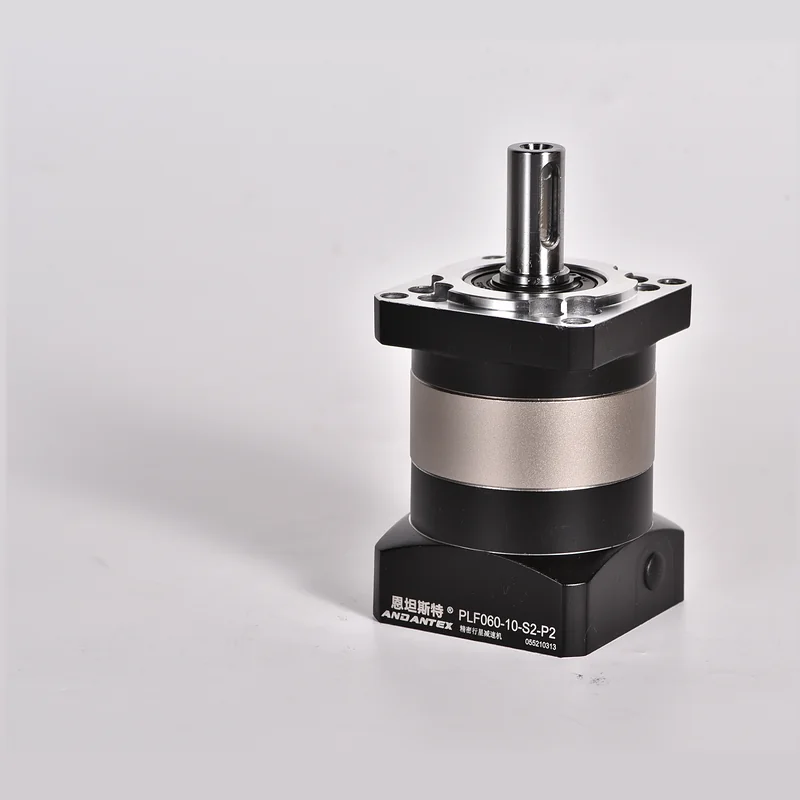
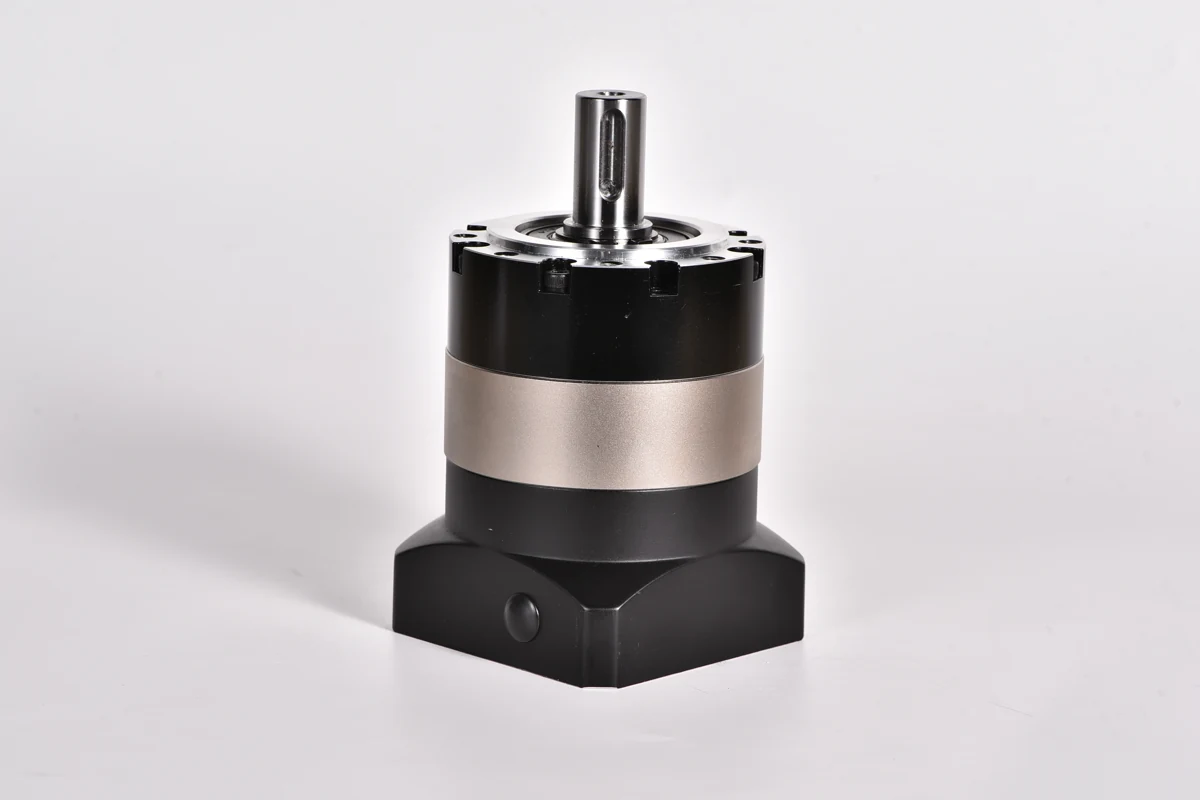
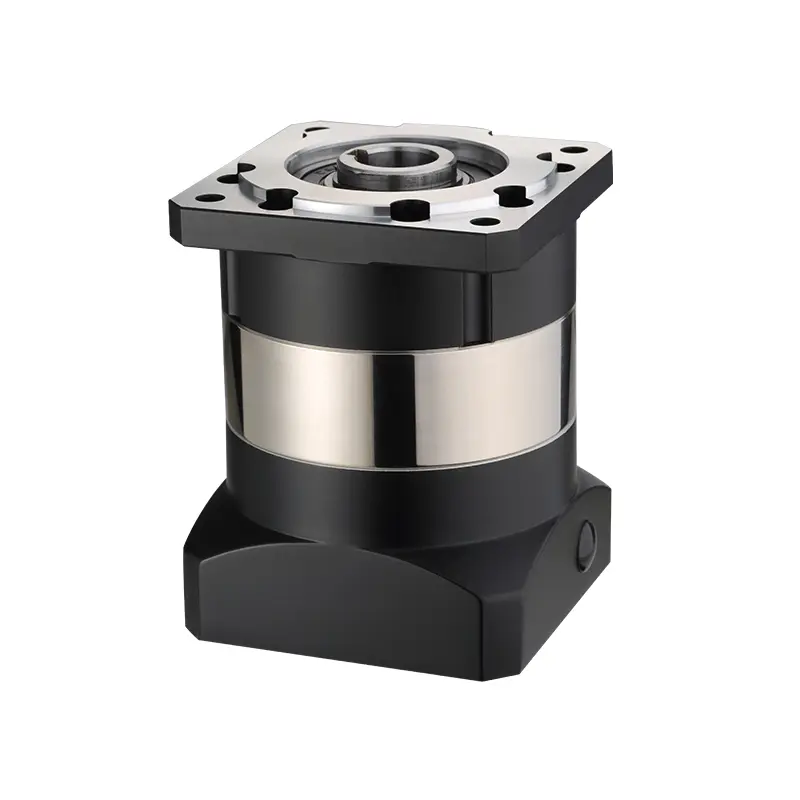
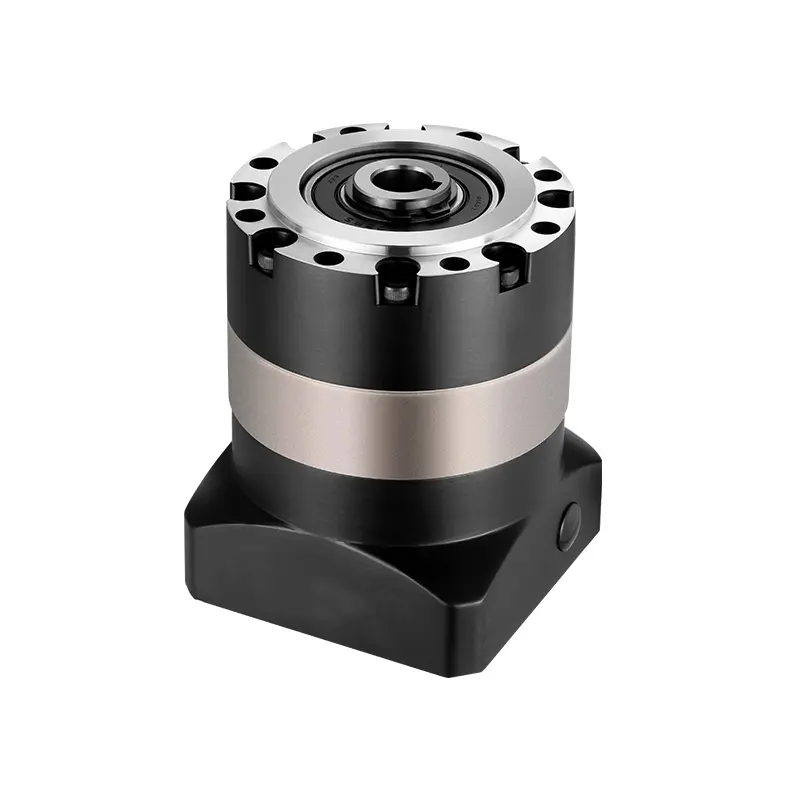
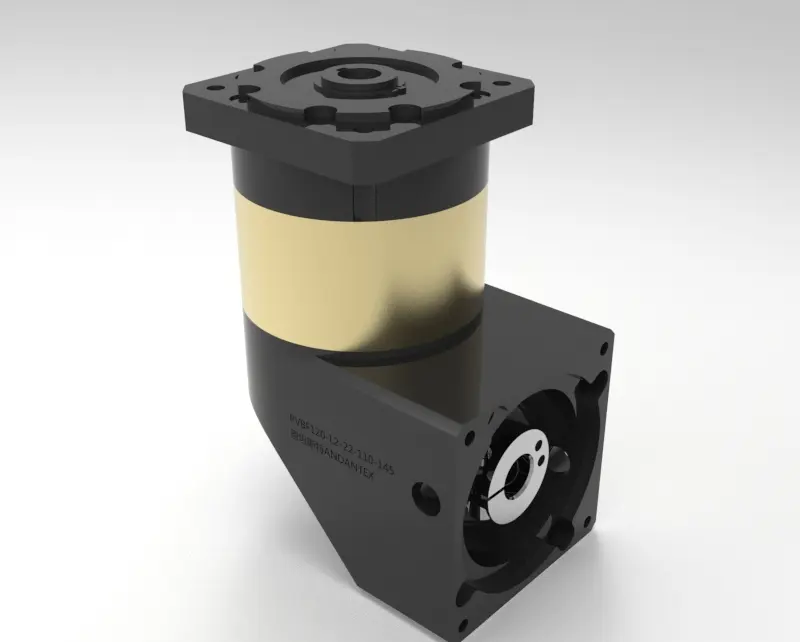
Having the exact same 20:1 gear ratio never means two gearboxes carry similar torque: gear ratio only sets speed division, whereas rated output torque (T2N) scales roughly with frame diameter squared times gear face width (D² × b), tooth geometry (spur vs. helical), bearing span, and whether a datasheet quotes true continuous T2N or inflated peak T2B. You may drop down one frame size only if all four mechanical gates pass—peak torque, RMS fatigue, radial shaft load, and torsional stiffness. And when one common shaft drives four stations that can move simultaneously, size for a 1.0 coincidence factor (summing all four peak torques plus shaft-and-fixture inertia) and verify torsional twist so Station 4 stays phase-aligned with Station 1.
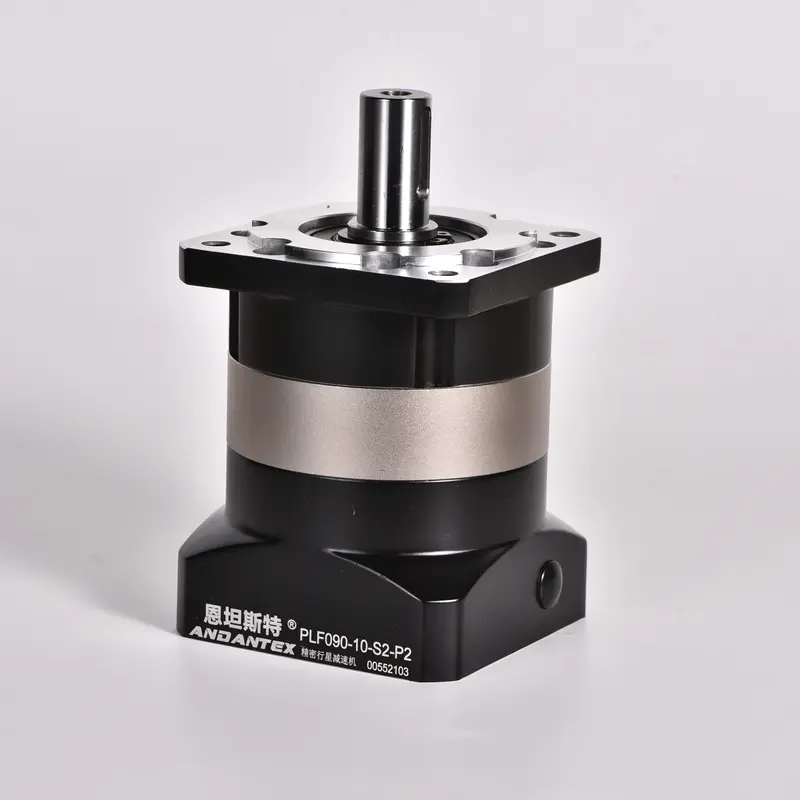
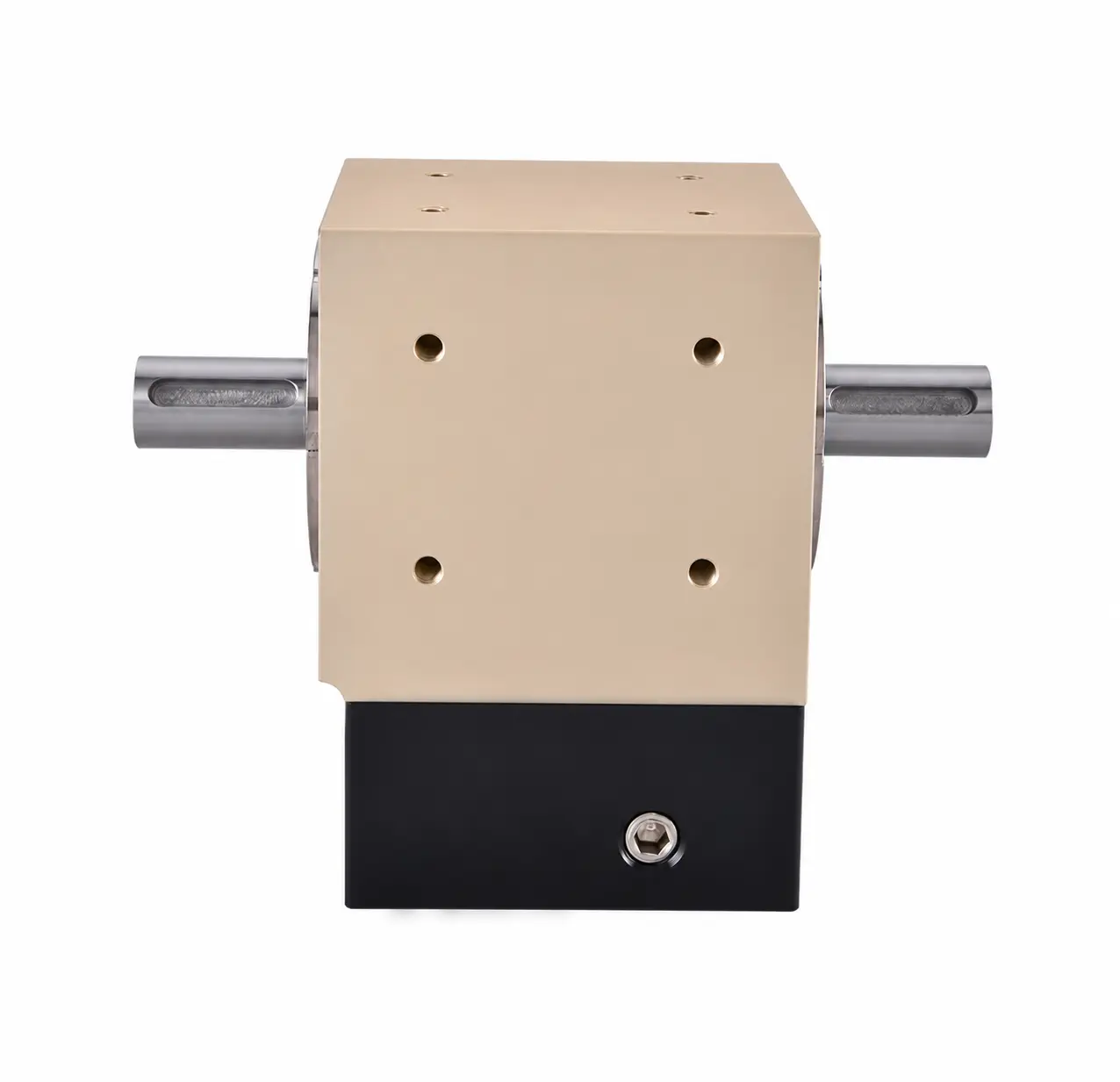
1. Why Two 20:1 Gearboxes Differ by 10× in Torque—And the 4-Gate Downsizing Test
Compare published ANDANTEX continuous output ratings all at the exact same 20:1 (L2) ratio:
- PLF060-20 (
60 mmspur):40 Nmcontinuous (60 Nmpeak),240 Nmax radial force - PAG060-20 / TPG060-20 (
60 mmhelical):40–45 Nmcontinuous,1,530 Nmax radial force - PLF090-20 (
90 mmspur) / PLX090-20 (90 mmdisc):120–122 Nmcontinuous (180–183 Nmpeak), up to4,100 Nradial onPLX090 - PLF120-20 / PAW120-20 (
120 mm):210–220 Nmcontinuous, up to6,100 Nradial onPAW120
To check whether your load can safely use the smaller 20:1 gearbox (saving cabinet depth and cost), pass all four gates—remembering never to mistake an old brand's T2B peak rating for T2N (verify Rated vs. Peak Torque definitions):
| Downsizing Gate | What You Check on the Smaller 20:1 Unit | Risk If Downsized Blindly |
|---|---|---|
1. Acceleration & E-Stop Peak (T2B) | T_peak × f_z ≤ 1.5 × T2N (for example, 60 Nm on PLF060 vs. 183 Nm on PLF090) | Pitting and chipped planet teeth during emergency stops or 40 cpm rapid starts |
2. Continuous Thermal & RMS Torque (T2N) | Maintain ≥ 1.2–1.3× safety margin under T2N (L_10h bearing life scales inversely to torque^3) | Cutting frame size in half slashes gearbox life below 3,000 hours |
3. Overhung Radial / Axial Load (Fr / Fa) | Verify belt pull or pinion load (PLF060: 240 N vs. PAG060: 1,530 N vs. PLX090: 4,100 N) | Output bearing fatigue even when torque sits below 50% (check belt radial calculation) |
| 4. Motor Shaft Bore & Rigidity | Larger servos (19 mm / 22 mm shafts) physically outgrow small 060 hubs; check torsional stiffness (Nm/arcmin) | Longer settling times and coupling windup under heavy inertias |
2. How to Calculate Gearbox Torque for 1 Shaft Driving 4 Simultaneous Stations
When one common lineshaft drives four synchronized stations (such as four pusher cams, four sealing jaws, or four rotary grippers) and even occasionally all four fire simultaneously, you must apply a 1.0 coincidence factor—never assume a 50% diversity discount unless mechanical interlocks guarantee staggering:
T_req = [ Σ(T_process,1..4) / η_mech + (J_shaft + ΣJ_stations,1..4) × α ] × f_sync
- Sum All 4 Peak Process Loads + Drag: Add cutting, clamping, or lifting torque across all 4 stations plus pillow-block bearing drag divided by downstream transmission efficiency (
~0.90–0.96). - Add Combined Shaft & Station Inertias During Acceleration: Multiply total rotational inertia of the full lineshaft plus all 4 stations by angular acceleration
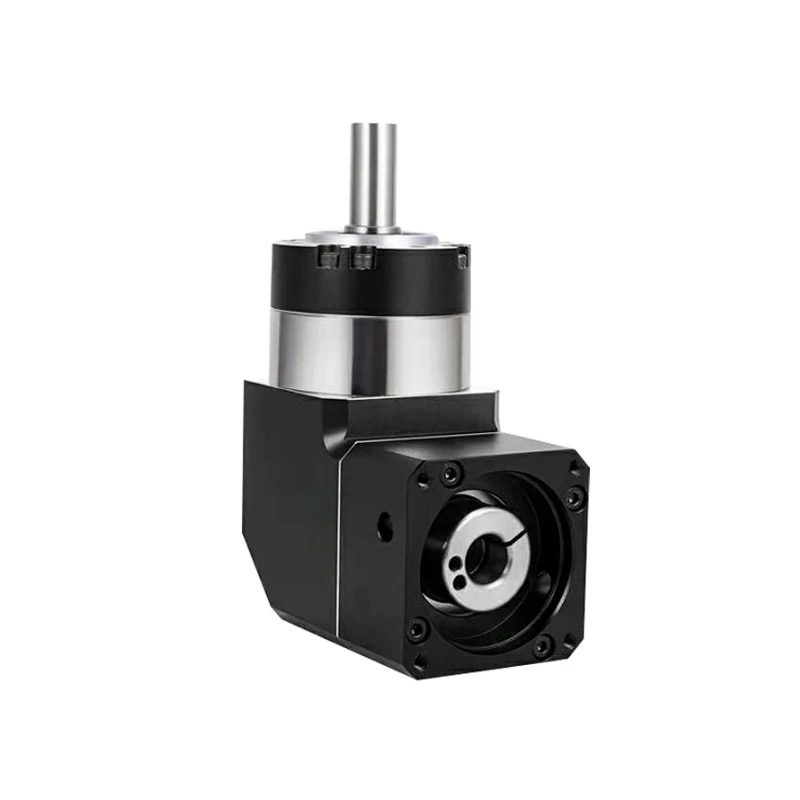
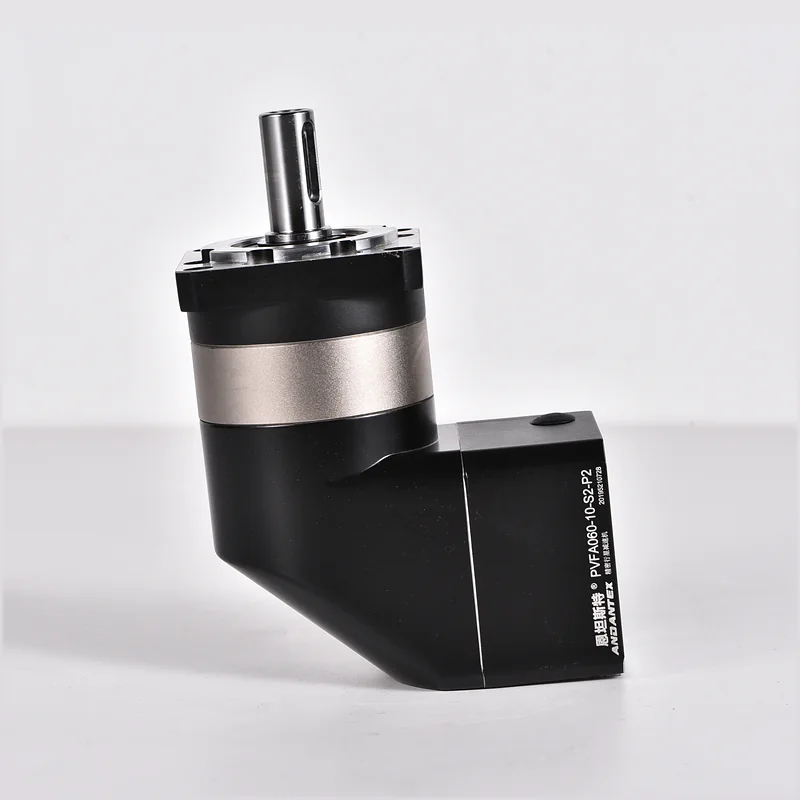
α—at fast cycle rates, inertial acceleration often exceeds static process torque. - Check Shaft Torsional Twist Between Station 1 and Station 4: A single gearbox bolted at the far left end forces 100% of 4-station torque past Station 1 through a long shaft, causing phase lag at Station 4. Moving the drive to the middle with a PVFH Dual-Shaft Right-Angle Gearbox (2 stations left + 2 stations right) cuts maximum shaft torque by
50%and torsional twist angle by75%(see our Multi-Shaft Sync Bevel Guide). - Consider PLC Micro-Staggering (
50–100 ms): If four pneumatic/mechanical cams do not require microsecond synchronization, offsetting start triggers by50 msdrops simultaneous peak acceleration torque cleanly so a compact drive suffices.
Frequently Asked Questions (FAQ)
Q1: Does a helical 20:1 PAG060 have meaningfully stronger capacity than a spur PLF060 at the same 60 mm size?
Torque rises modestly (45 Nm vs. 40 Nm rated), while the decisive upgrade is radial bearing capacity (1,530 N vs. 240 N) and lower backlash (≤ 3–5 vs. ≤ 12 arcmin), letting PAG060 survive tight belt drives that kill spur 060 bearings.
Q2: Can two 20:1 gearboxes share one motor on an open 4-station lineshaft?
Wait—never wire two separate speed reducers in parallel onto one rigid common shaft without compliant torsional couplings or split dual-output bevel gears (PVFH / AT-FL), otherwise tooth backlash tolerance fights internally and overloads one gearbox.
Q3: Where can I compare quick torque vs. ratio estimates before requesting a 2D overlay?
Use our interactive Planetary Gearbox Ratio & Torque Calculator or submit all 4 station torques and center distances directly via our Engineering RFQ Desk.